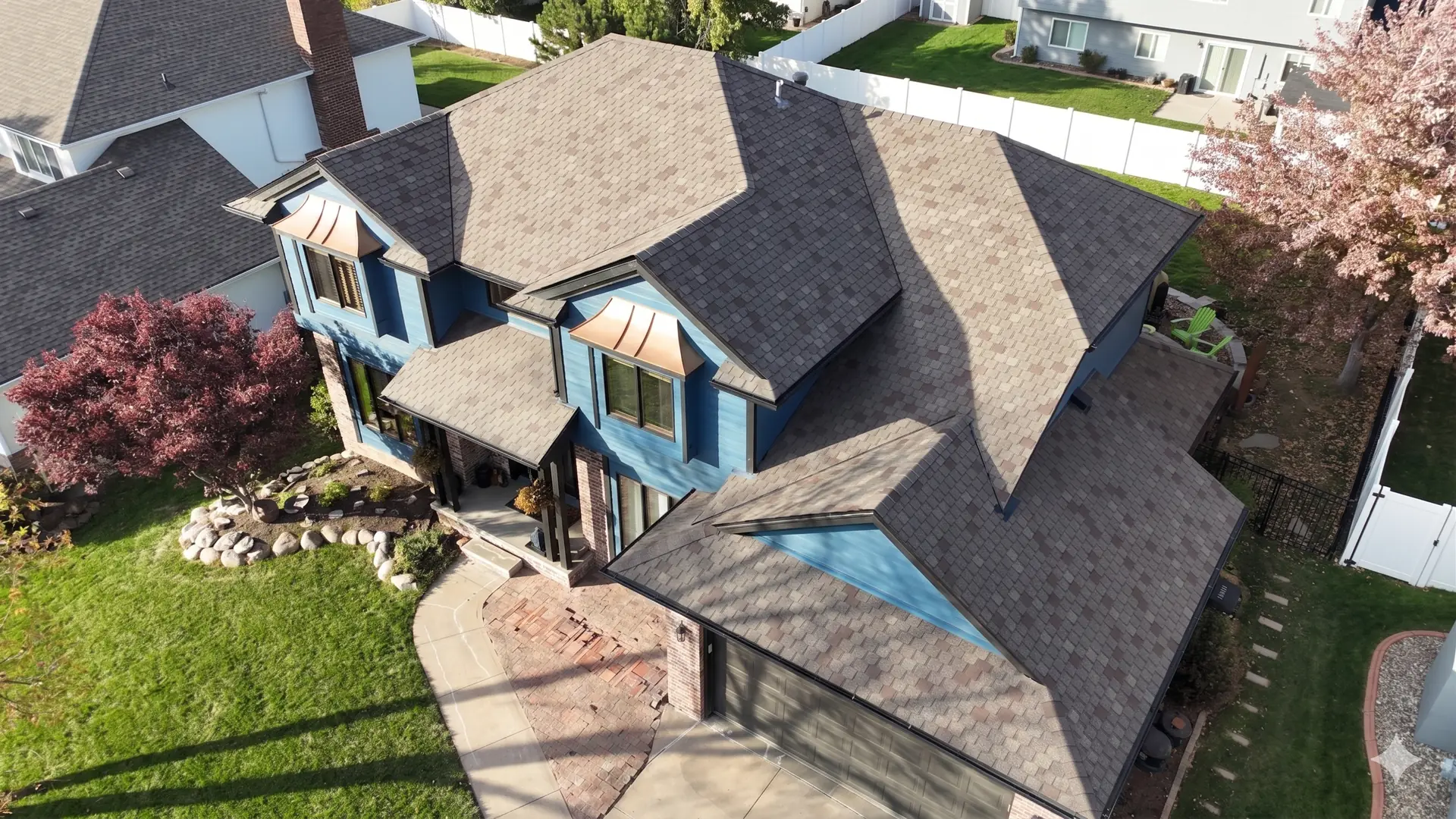
Class 4 shingles in Olathe cost more upfront. Find out if the storm protection and possible insurance savings make the upgrade worth it.
Every year after hail season winds down, we get the same question from Olathe homeowners standing in their driveway looking at a roof that just took a beating: should the next roof be stronger? Class 4 shingles in Olathe come up in almost every one of those conversations, and the honest answer depends on factors that go beyond just the upfront price difference. After inspecting hundreds of hail-damaged roofs across Johnson County, we've seen exactly where Class 4 shingles earn their cost and where the upgrade matters less than homeowners expect.
The Short Answer: Are Class 4 Shingles Worth It?
Class 4 shingles in Olathe are worth considering if your home has a history of hail damage, you plan to stay in the home long-term, or your insurance carrier offers a meaningful premium discount for impact-resistant roofing. They cost more upfront than standard architectural shingles, typically somewhere between 10 and 20 percent more depending on the manufacturer, but they're rated to withstand impact from a two-inch steel ball without cracking, which translates to meaningfully better real-world performance during the kind of hail events Johnson County sees regularly. They're not hail-proof. They're hail-resistant, and that distinction matters when you're deciding if the cost makes sense for your situation.
What Homeowners Usually Notice First
Most Olathe homeowners start asking about Class 4 shingles after one of two experiences: they just went through a hail-damaged roof replacement and want to avoid repeating it, or they're comparing materials during a routine replacement and a contractor mentions the option.
What tends to catch their attention first:
- A noticeable price difference on the quote line item for Class 4 versus standard architectural shingles
- Mention of potential insurance premium discounts, with uncertainty about whether their specific carrier offers one
- Marketing claims from manufacturers that sound like the shingles are completely hail-proof
- Uncertainty about whether the upgrade is worth it if they don't plan to stay in the home for the long term
What homeowners often miss is that the value of Class 4 shingles in Olathe isn't just about avoiding the next hail claim. It's about reducing the frequency and severity of damage over the full lifespan of the roof, which has implications for long-term maintenance costs even between major storm events.
What a Roofing Contractor Looks For When Evaluating This Upgrade
On many replacement consultations in Olathe, we walk homeowners through the actual difference between standard and Class 4 shingles using real inspection findings, not just manufacturer specs. The rating system itself comes from UL 2218, an impact resistance test that drops steel balls of increasing size onto the shingle and checks for cracking on the underside.
Here's how we actually evaluate whether Class 4 shingles in Olathe make sense for a specific home:
Storm history of the property and neighborhood. Olathe and the broader Johnson County area have a documented pattern of recurring hail events, some years more severe than others. If a home has already been through two or more hail-related repairs or replacements in recent years, that pattern alone makes a strong case for the upgrade.
Roof exposure and orientation. Roofs with large, unobstructed exposure to the west and northwest, the direction most Kansas hailstorms approach from, tend to take more direct impact than roofs shielded by mature trees or neighboring structures. We assess the specific exposure of each roof face during the consultation.
Insurance carrier discount policies. Not all insurance companies offer a premium discount for Class 4 shingles, and the ones that do vary in how much they discount and what documentation they require. We encourage homeowners to call their carrier directly and confirm this before assuming the upgrade will pay for itself through reduced premiums.
Manufacturer warranty terms. Class 4 shingle lines often carry different warranty structures than standard architectural shingles, sometimes including specific language about hail impact coverage. Reading the actual warranty terms, not just the marketing material, matters here.
Long-term ownership plans. A homeowner planning to stay in their Olathe home for ten-plus years gets more value from the upgrade than someone planning to sell within two to three years, since the resale market doesn't always reflect the full cost difference back into home value.
A roofer who's honest about this upgrade won't oversell it as a guaranteed solution. The goal is to give you an accurate picture of what the rating actually means in practice.
Common Misunderstandings About Class 4 Shingles
Believing they're hail-proof. No shingle, including Class 4, is immune to damage from large enough hail. Olathe has recorded golf ball and even baseball-sized hail in past storm events, and stones of that size can still cause damage to impact-resistant shingles, just less than they would to a standard shingle. The rating reduces risk. It doesn't eliminate it.
Assuming the insurance discount automatically applies. Some homeowners install Class 4 shingles and assume their premium will drop without confirming this with their carrier first. Discount availability and amount vary significantly by insurance company, and some carriers require specific documentation or certification at the time of installation to apply the discount.
Thinking the upgrade only matters for hail. Class 4 shingles in Olathe also tend to perform better against general wear, foot traffic during maintenance, and minor impact from falling branches. The benefit isn't limited strictly to hail events, even though that's the primary driver of the conversation.
Comparing the wrong cost. Some homeowners compare the cost of Class 4 shingles against doing nothing, rather than against the cost of the next hail-related repair or replacement. When you factor in the cost of recurring storm damage over a 20-year roof lifespan in a hail-prone area like Johnson County, the comparison often looks different.
Why Olathe and Johnson County See Recurring Hail Risk
Johnson County sits squarely within what meteorologists sometimes refer to as part of the broader hail corridor that stretches across the central United States. According to NOAA storm event records, Johnson County has recorded numerous significant hail events over the past decade, with several producing stones in the golf ball to baseball size range, large enough to cause structural shingle damage and, in some cases, dent vehicles and damage siding.
Olathe's rapid growth over the past two decades means a large share of the city's housing stock was built during a period when standard architectural shingles were the default choice, with Class 4 options being a less common consideration at the time of original construction. As more of these roofs reach replacement age, the Class 4 conversation has become a regular part of the replacement process for homeowners who want to reduce their exposure to the next hail cycle.
A Decision One Olathe Homeowner Made
A homeowner in the Cedar Creek area came to us in August after their second hail-related roof claim in four years. They were frustrated, understandably, and asked directly whether there was a way to stop this from happening every couple of seasons. We walked through their specific roof exposure, which faced largely open sky to the northwest with minimal tree coverage, and reviewed their insurance policy's discount terms for impact-resistant materials with them.
Given the repeat damage history and the open exposure of the roof, Class 4 shingles in Olathe made clear sense for that home. We installed a Class 4 architectural line, confirmed the insurance discount documentation requirements were met, and gave the homeowner realistic expectations: this roof would still take hail impact in a severe enough storm, but the frequency and severity of damage requiring repair should drop meaningfully compared to their previous standard shingle roof.
Not every homeowner's situation matches this one. A roof with significant tree coverage and no storm damage history in over a decade is a different conversation entirely.
Making the Right Call for Your Home
The decision to upgrade isn't one-size-fits-all. If your Olathe home has a documented pattern of hail damage, faces open exposure to the west or northwest, and you plan to stay long-term, the case for Class 4 shingles in Olathe is generally strong. If your home has had minimal storm damage history, sits under significant tree cover, or you're planning to sell within a few years, a standard architectural shingle might be the more cost-effective choice, and that's a perfectly reasonable decision too.
We don't push the upgrade on every replacement. We walk through your specific roof, your storm history, and your plans for the home, and give you an honest recommendation based on what actually makes sense.
Ask Capstone About Storm-Ready Roofing Options
If your Olathe roof has been through repeat hail damage or you're simply planning ahead for the next storm cycle, it's worth having a real conversation about whether Class 4 shingles in Olathe make sense for your specific home. Capstone Contracting Solutions installs both standard and impact-resistant roofing systems and will give you an honest comparison based on your roof's exposure, your storm history, and your long-term plans. Reach out to talk with us about new roof installation options and find out if a storm-ready upgrade fits your home and budget.
Visit us in Grain Valley, MO, we work with homeowners across Johnson County, including Olathe, on every type of roofing project.
Frequently Asked Questions
How much more do Class 4 shingles in Olathe cost compared to standard shingles?
The price difference typically runs somewhere between 10 and 20 percent more than standard architectural shingles, though the exact number depends on the manufacturer and specific product line. The cost difference is generally most justified for homes with a documented hail damage history or significant open exposure to storm-prone directions, since those homes are most likely to see the upgrade pay off through reduced repair frequency.
Will installing Class 4 shingles in Olathe automatically lower my insurance premium?
Not automatically. Some insurance carriers offer a discount for impact-resistant roofing materials, but the amount and eligibility requirements vary significantly by company. We recommend calling your specific carrier before installation to confirm whether a discount applies and what documentation they'll need at the time of installation to process it.
Can Class 4 shingles still be damaged by hail?
Yes. Class 4 is a rating, not a guarantee of zero damage. Large enough hail, including the golf ball and baseball-sized stones occasionally recorded in Johnson County storms, can still cause damage to impact-resistant shingles. The rating significantly reduces the likelihood and severity of damage from more common hail sizes, but it doesn't make a roof immune to severe storms.
Is it worth upgrading to Class 4 shingles if my Olathe roof hasn't had hail damage before?
It depends on your roof's exposure and your long-term plans for the home. If your roof has significant unobstructed exposure to the west or northwest and you plan to stay in the home for many years, the upgrade can be a reasonable preventive investment. If your home has substantial tree cover or you're planning to move in the next few years, a standard shingle may be the more practical choice.

Rebekah Saettone, Founder and CEO. Woman-owned roofing in Greater Kansas City since day one.