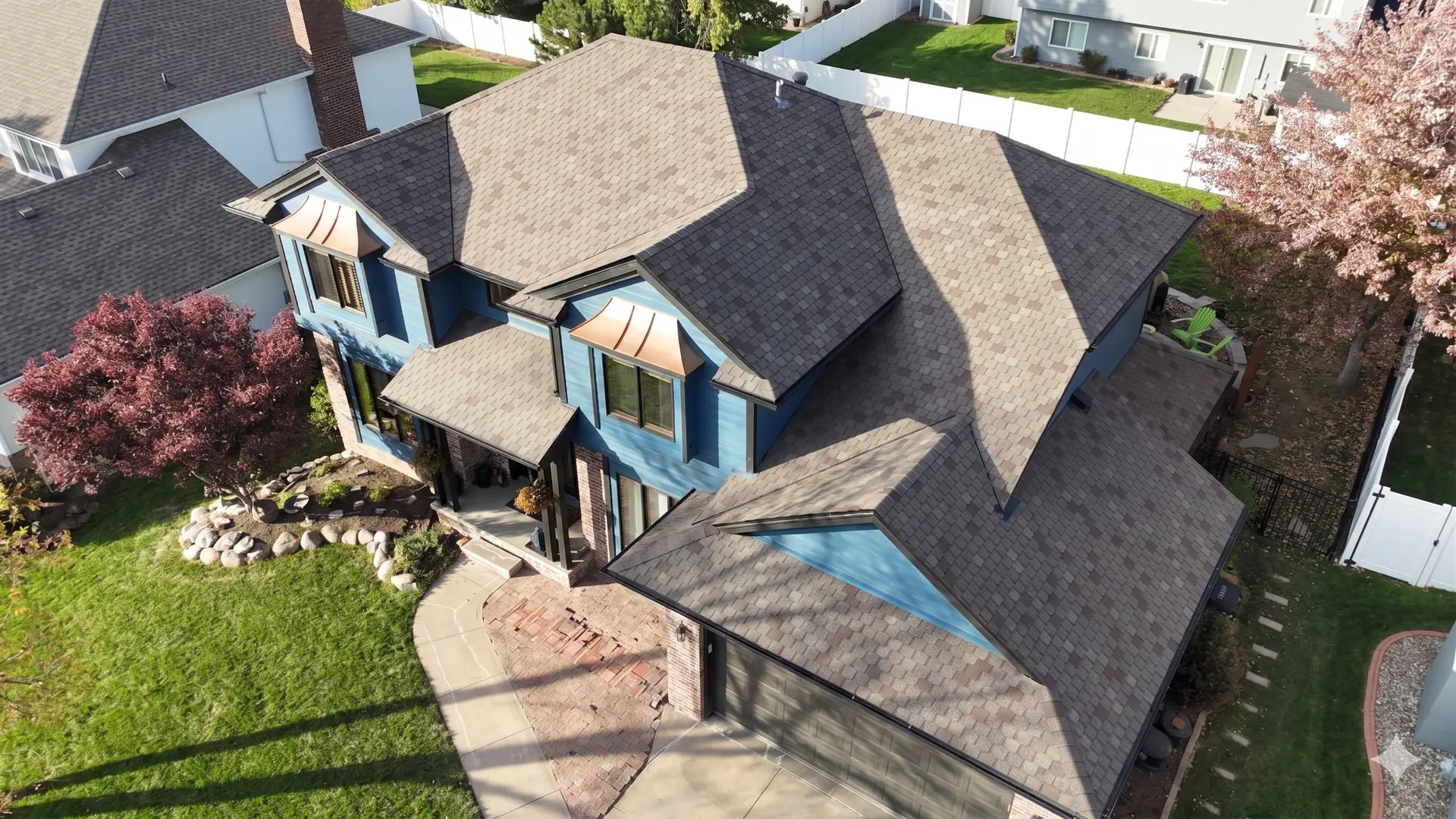
Impact-resistant shingles in Lenexa cost more upfront but often pay off. Learn how they're rated and what insurers offer.
Impact-resistant shingles in Lenexa come up in almost every replacement conversation we have with homeowners who've been through a hailstorm before. The upfront cost is higher than standard shingles, and homeowners want a straight answer about whether that difference actually pays off, both in storm protection and in what it does to their insurance premium.
What's the Quick Answer on Impact-Resistant Shingles in Lenexa?
Impact-resistant shingles, rated Class 4 under the standard testing system, hold up better against hail than standard architectural shingles, and many insurance carriers offer a premium discount for installing them, though the discount amount and availability vary by insurer. The upfront cost typically runs higher than standard shingles, but for homeowners who've already filed one or more hail claims, or who simply want to reduce the chance of future storm damage, the combination of fewer repairs and a potential premium discount often makes the difference worthwhile over time. It's not the right upgrade for every budget or every roof, though, so the decision depends on your specific situation.
What Homeowners Usually Notice First
Most Lenexa homeowners start looking into impact-resistant shingles after going through at least one hail claim already. After replacing a roof once due to storm damage, the idea of paying more upfront to reduce the odds of doing it again in five years starts to make more sense than it might have the first time around.
Some homeowners come to it differently, through their insurance agent mentioning a premium discount for Class 4 shingles during a policy renewal conversation. That discount, where available, can meaningfully offset the higher material cost over the life of the roof, though it's worth confirming the exact percentage and requirements with your specific carrier rather than assuming a standard figure applies.
What people often don't realize going in is that impact-resistant shingles aren't a single product. They vary by manufacturer, material, and design, with different appearances and price points, which means the conversation isn't just yes or no but also which specific option fits your home and budget.
What a Roofing Contractor Looks For
When homeowners in Lenexa ask about impact-resistant shingles, we start by looking at their current roof's condition and history. A roof that's already showing wear or has been patched multiple times after hail events is a stronger candidate for the upgrade than a newer roof with no storm damage history, simply because the return on that investment shows up faster for a roof more likely to face another hailstorm soon.
We also walk through the actual rating system with homeowners, since the Class 4 designation reflects a specific, standardized impact test, not just marketing language. Products that pass this test are dropped with steel balls of a defined size and show no cracking, which correlates with better real-world hail performance, though no shingle is completely immune to a severe enough storm.
What homeowners often miss is that installation quality matters as much as the shingle itself. Even a Class 4 rated shingle installed with poor ventilation or improper nailing pattern won't perform to its full potential, so choosing an experienced local installer matters alongside choosing the right product.
One Lenexa homeowner called us after their second hail claim in four years, frustrated with the cycle of repairs and rising premiums. We walked them through several impact-resistant shingle options at different price points, along with an estimate of the insurance discount their specific carrier offered for Class 4 materials. They chose a mid-range impact-resistant option, and between the reduced repair likelihood and the ongoing premium discount, the extra upfront cost is on track to pay for itself well within the shingle's expected lifespan.
Common Mistakes Homeowners Make
The biggest mistake is assuming all impact-resistant shingles cost roughly the same premium over standard shingles. Pricing varies significantly by manufacturer and material, and getting quotes on a few different options gives you a much clearer picture than assuming a single flat markup applies everywhere.
The second mistake is skipping the conversation with your insurance agent before deciding. The premium discount, where available, is a real factor in the cost equation, and not confirming it ahead of time means making the decision without a piece of information that could meaningfully change the math.
The third mistake is assuming impact-resistant shingles mean you'll never need a repair again. They reduce the likelihood and severity of hail damage significantly, but severe enough storms can still cause damage to any roofing material. The upgrade shifts the odds in your favor without eliminating risk entirely.
The fourth mistake is choosing based on price alone without considering installation quality. A less expensive impact-resistant product installed correctly by an experienced local crew often outperforms a premium product installed poorly, so the installer matters as much as the shingle brand.
How Impact-Resistant Shingles Are Actually Rated
The Class 4 rating that comes up in most conversations about impact-resistant shingles in Lenexa comes from a standardized industry test, not a marketing claim. Testers drop steel balls of a specific size and weight onto a shingle sample from a set height, designed to simulate the force of large hail, and a shingle earns Class 4 status only if it shows no cracking or splitting on the underside after impact.
This matters because not every product labeled "impact-resistant" carries the same rating. Some fall into Class 3 or lower categories, which still offer improved performance over standard shingles but not to the same degree as Class 4 materials. Asking specifically about the class rating, rather than just whether a product is impact-resistant in general terms, gives you an accurate comparison between options.
Material composition also affects real-world performance beyond the lab test. Some impact-resistant shingles use a reinforced fiberglass mat, while others incorporate rubberized or polymer-modified asphalt for additional flexibility on impact. Each approach performs a little differently, and a knowledgeable local installer can walk you through which option tends to hold up best against the specific hail patterns common in this part of the Kansas City metro.
How to Decide If the Upgrade Makes Sense
If you're already replacing your roof, especially after storm damage, the incremental cost of upgrading to impact-resistant shingles is often smaller than it seems compared to the total project cost. If you're not due for a replacement yet, it's still worth factoring into your planning for when that time comes, particularly if your area has a history of regular hail activity.
Talking with both a roofing contractor and your insurance agent gives you the full picture, covering both the storm protection side and the financial side of the decision, rather than just one piece of it.
Homeowners who've filed multiple claims in a short span often see the fastest payoff from upgrading, since the combination of avoided future claims and an ongoing premium discount compounds over time. Homeowners considering a first-time replacement with no storm history yet still benefit, just with a longer timeline before the upgrade fully pays for itself compared to standard shingles.
Local Weather Context for Lenexa Roofs
Lenexa sits within Johnson County, part of the Kansas City metro area that NOAA's Storm Prediction Center consistently ranks among the more hail-active regions in the Midwest, with spring representing the peak season but real hail events occurring well into summer and fall, including the golf-ball-sized hail that hit parts of the metro on August 19, 2026.
That repeated storm exposure is exactly why impact-resistant shingles in Lenexa come up so often in replacement conversations here specifically, compared to regions with less frequent hail activity. Homeowners who've already been through one or two hail claims are making a calculated bet that the next storm is a matter of when, not if, and pricing that risk into their roofing material choice makes practical sense in this particular climate.
What to Do If You're Considering the Upgrade
If you're weighing impact-resistant shingles for an upcoming replacement, start with a free inspection and a conversation about your current roof's condition and history. Our roof replacement team can walk you through specific product options, pricing, and what your insurance carrier may offer in return for the upgrade.
If you'd like to see samples in person and talk through your options directly, visit us in Grain Valley, MO, or call to schedule your free consultation. Making this decision with full information, rather than guessing at costs and discounts, is the best way to know whether the upgrade actually fits your situation.
Frequently Asked Questions
How much more do impact-resistant shingles in Lenexa typically cost?
Pricing varies by manufacturer and specific product, but the premium over standard architectural shingles generally ranges from a modest percentage increase to a more significant one for premium options. Getting quotes on a few specific products gives you an accurate comparison for your home.
Does every insurance company offer a discount for Class 4 shingles?
No. Discount availability and amount vary by carrier and by state, so it's worth confirming directly with your specific insurance company rather than assuming a standard discount applies universally.
Are impact-resistant shingles guaranteed to survive any hailstorm?
No roofing material is completely immune to hail damage in a severe enough storm. Class 4 rated shingles perform significantly better than standard shingles in most hail events, which reduces both the likelihood and severity of damage, but it doesn't eliminate risk entirely.
Do impact-resistant shingles look different from standard shingles?
Many modern impact-resistant products are designed to closely resemble standard architectural shingles, so the visual difference is often minimal. Specific appearance varies by manufacturer and product line, which is worth reviewing with samples before deciding.
Is it worth upgrading if I'm not replacing my whole roof right now?
Partial upgrades aren't typically recommended, since mixing shingle types on one roof can create both appearance and performance inconsistencies. It's usually better to plan for impact-resistant shingles at your next full replacement rather than a partial installation now.
Want our roofing tips to show up first when you search? Add us as a preferred source on Google.

Rebekah Saettone, Founder and CEO. Woman-owned roofing in Greater Kansas City since day one.
