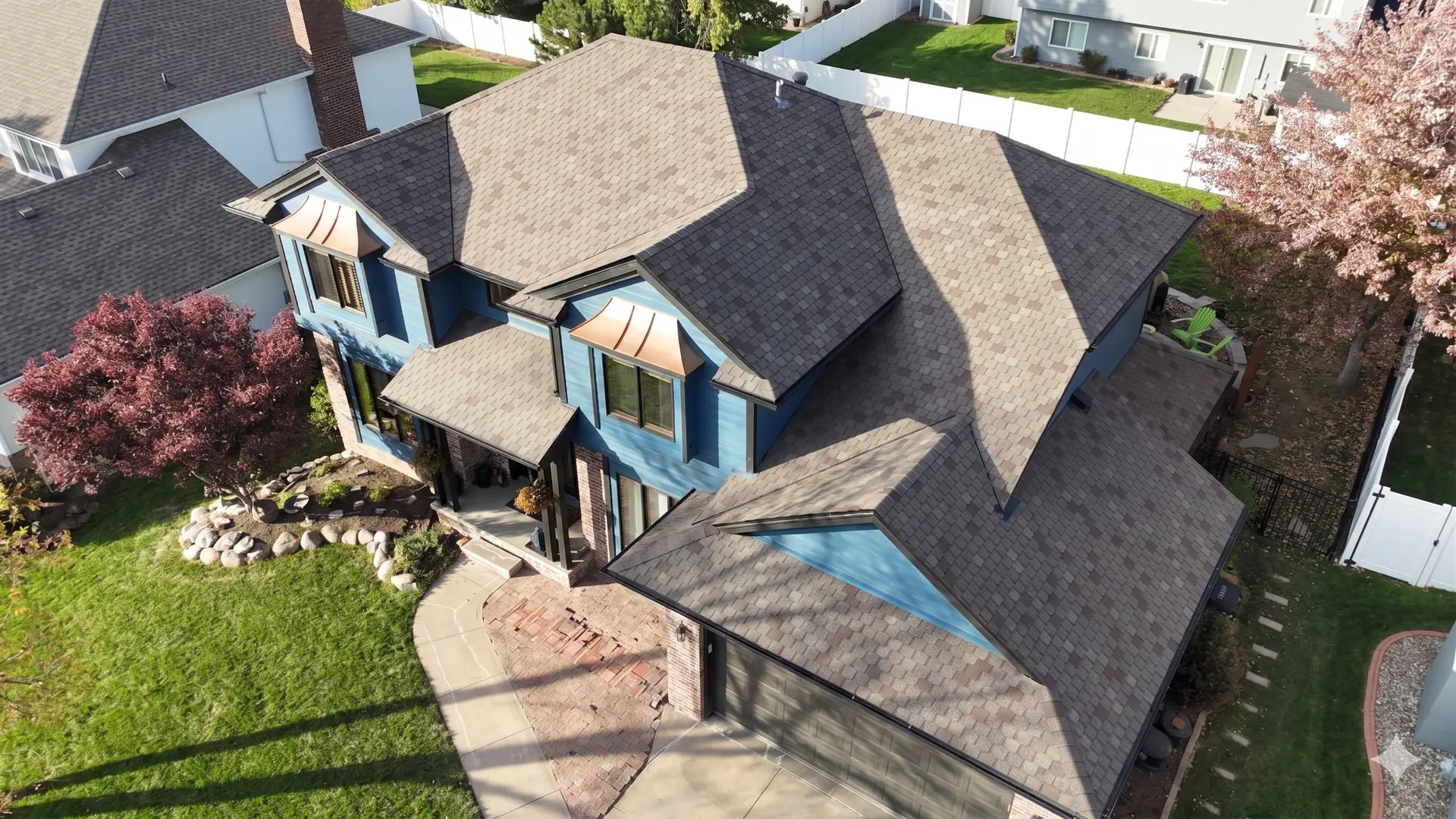
Not sure about a roof leak in Independence, MO? Learn when to call now versus schedule, from Capstone's local roofing team.
A roof leak in Independence rarely starts where you first see it. Water travels along rafters and decking before it ever shows up as a stain on your ceiling, which means the drip you're looking at might be several feet from where the actual opening is. After this September's wind damage across Jackson County, we've fielded a lot of calls asking the same basic question: is this urgent, or can it wait?
What's the Quick Answer on Calling a Roofer for a Roof Leak in Independence?
Call right away if you see active dripping, a sagging ceiling, or water stains that are spreading day to day. If it's a small, isolated stain that hasn't grown in a week or two, you likely have a little more time, but it's still worth scheduling an inspection soon rather than waiting for winter to make the roof harder to access safely. Active leaks during or immediately after a storm are always worth an urgent call, since delaying can let a contained problem spread into insulation, drywall, and framing. When in doubt, get it looked at sooner rather than later.
What Homeowners Usually Notice First
Most homeowners in Independence don't discover a roof leak by finding the hole itself. They find a stain on a ceiling, a musty smell in an upstairs closet, or a soft spot in drywall that gives slightly when pressed. September's wind damage across the area, including the storm that hit tents and structures during Santa-Cali-Gon Days, left plenty of roofs with wind-lifted shingles that didn't leak immediately but started a few weeks later.
That delay is one of the most confusing parts for homeowners. A roof can take real damage during a storm and not leak for days or even weeks afterward, especially if the damage is a cracked seal or a partially lifted shingle rather than something completely torn off. By the time water actually shows up inside the house, the underlying damage has usually existed for a while already.
Older homes in parts of Independence add another layer to this. Roofs with multiple additions or roofline changes over the decades often have more complex flashing details, which gives water more potential entry points than a simpler, newer roofline would.
What a Roofing Contractor Looks For
A roofer evaluates this by looking at the whole path water could have traveled, not just the spot where it appeared inside your home. On many leak calls in Independence, we start in the attic, tracing water stains on the underside of the decking back toward their actual source, which is often several feet away from the ceiling stain a homeowner called about.
From there, we check the roof itself for the usual culprits: cracked or lifted flashing around chimneys and vents, wind-damaged shingle tabs, and any spot where a tree limb or debris made direct contact during a storm. What homeowners often miss is that flashing failures cause more leaks than open shingle damage does, simply because flashing seals are smaller, more complex, and easier to overlook from the ground.
We also assess how active the leak currently is versus how long it's likely been developing. A fresh, actively dripping leak after a specific storm event is a different situation than a slow, long-term leak that's been quietly working its way through insulation for months. Both need attention, but the urgency and the approach differ.
One Independence homeowner called us after noticing a small ceiling stain that hadn't changed in appearance for almost two weeks. They assumed it wasn't urgent since it wasn't actively dripping. When we got into the attic, we found the insulation directly above that spot was saturated and had been for some time, even though the visible stain looked stable from below. The leak wasn't worsening on the surface, but the damage underneath it absolutely was.
Tracing the moisture back, we found the actual entry point nearly four feet away, at a section of flashing damage during September's wind. Water had been running along a rafter before dropping at the spot where the stain appeared, which is exactly the kind of disconnect between symptom and source that makes a direct inspection so important.
Common Mistakes Homeowners Make
The biggest mistake is assuming that a leak that isn't actively dripping isn't urgent. Slow, steady moisture can saturate insulation and begin affecting framing long before it shows up as a dramatic, visible problem inside the house.
The second mistake is trying to trace a leak's source by standing directly under the interior stain and assuming the roof damage is in that exact spot. Water often travels along rafters or decking before dropping, so the actual opening can be several feet away, sometimes on a completely different slope of the roof.
The third mistake is putting off a call because the leak seems minor, then dealing with a much larger repair once winter arrives and freeze-thaw cycles have made the damage worse. What could have been a targeted repair in October sometimes becomes a full section replacement by spring.
The fourth mistake is assuming every roof leak in Independence needs a full roof replacement. Most leaks, caught early, are targeted repairs involving flashing, a single damaged shingle section, or a cracked pipe boot. Replacement usually only becomes necessary when the underlying roof is already old or when damage has been left unaddressed long enough to spread significantly.
What Happens During an Inspection Call
When you call about a suspected roof leak in Independence, the first questions we ask are about the interior symptoms, not the roof itself. Is the stain actively growing? Is there a musty smell nearby? Has the ceiling started to sag or feel soft? These details help us prioritize the visit and bring the right equipment, whether that's a moisture meter for the attic or tarping materials in case active water intrusion needs to be stopped immediately.
Once we're on-site, the attic inspection usually comes before the roof walk. Tracing moisture from the inside out gives us a more accurate starting point than guessing based on the exterior alone, especially on a roof with multiple slopes or valleys where water can travel in unexpected directions before it drips.
How to Decide If Your Leak Is Urgent
Active dripping, a rapidly spreading stain, or any sagging in the ceiling means calling immediately, regardless of the time of year. A small, stable stain that hasn't changed in a week or two still deserves an inspection, just with slightly less immediate urgency, especially if you can get on the schedule before the first hard freeze.
Either way, the underlying question isn't really how bad the leak looks right now. It's how long the damage has likely been developing, and that's something only a direct inspection can actually answer.
Local Weather Context for Independence Roofs
Independence sits in a part of Jackson County that saw real wind and storm activity in September 2026, including damage reported during the Santa-Cali-Gon Days Festival with gusts estimated between 50 and 60 miles per hour. NOAA's Storm Prediction Center tracks these events, and while spring remains the Kansas City metro's most hail-active season, wind damage doesn't follow the same calendar and can hit hard well into fall.
That matters because wind-related roof damage often behaves differently than hail. A shingle with a broken seal from high wind might not leak right away, but every subsequent storm and every freeze-thaw cycle through the winter puts more strain on that weak point. A roof leak in Independence that starts as a minor issue in October has a real chance of becoming a much bigger one by the time spring storms return.
What to Do If You're Seeing Signs of a Leak
If you're seeing an active leak, don't wait. Call for a same-day assessment so the damage doesn't spread further into insulation and framing while you wait. If it's a smaller, stable stain, schedule an inspection soon so we can trace the source and address it with a targeted roof repair before winter weather makes the roof harder and more dangerous to work on.
Capstone's inspections are owner-managed and photo-documented, so you get a direct, honest answer about what's actually happening, not just a repair quote. If you'd like to meet the team in person first, visit us in Grain Valley, MO, or call to schedule your free roof inspection today. Either way, the sooner the source is identified, the smaller the eventual repair tends to be.
Frequently Asked Questions
Is a small ceiling stain always an emergency?
Not necessarily, but it shouldn't be ignored either. A stable, unchanging stain still often indicates ongoing moisture above it, even if it isn't actively dripping. An inspection can determine how serious the underlying issue actually is.
Why does a roof leak in Independence sometimes take weeks to show up after a storm?
Roof damage from wind or hail doesn't always cause immediate water intrusion. A cracked seal or lifted shingle tab can let small amounts of moisture in gradually, and it often takes repeated rain events before that moisture saturates enough material to show up as a visible interior stain.
Can I just patch the ceiling stain myself without fixing the roof?
Patching drywall without addressing the roof source only hides the problem temporarily. The moisture path remains open, and repainting or patching the ceiling doesn't stop water from continuing to enter during future storms.
How do I know if my leak is from this year's storms or something older?
A professional inspection can often help distinguish recent damage from long-term wear based on the condition of the shingles, flashing, and decking. This distinction matters for both the repair approach and any insurance conversation you might have.
Should I try to find the leak source myself before calling a roofer?
You can note where the interior damage is located, but climbing onto the roof yourself isn't necessary or recommended for safety reasons. Water travels along the roof deck before showing up inside, so the actual source is often not directly above the visible stain.
Want our roofing tips to show up first when you search? Add us as a preferred source on Google.

Rebekah Saettone, Founder and CEO. Woman-owned roofing in Greater Kansas City since day one.
