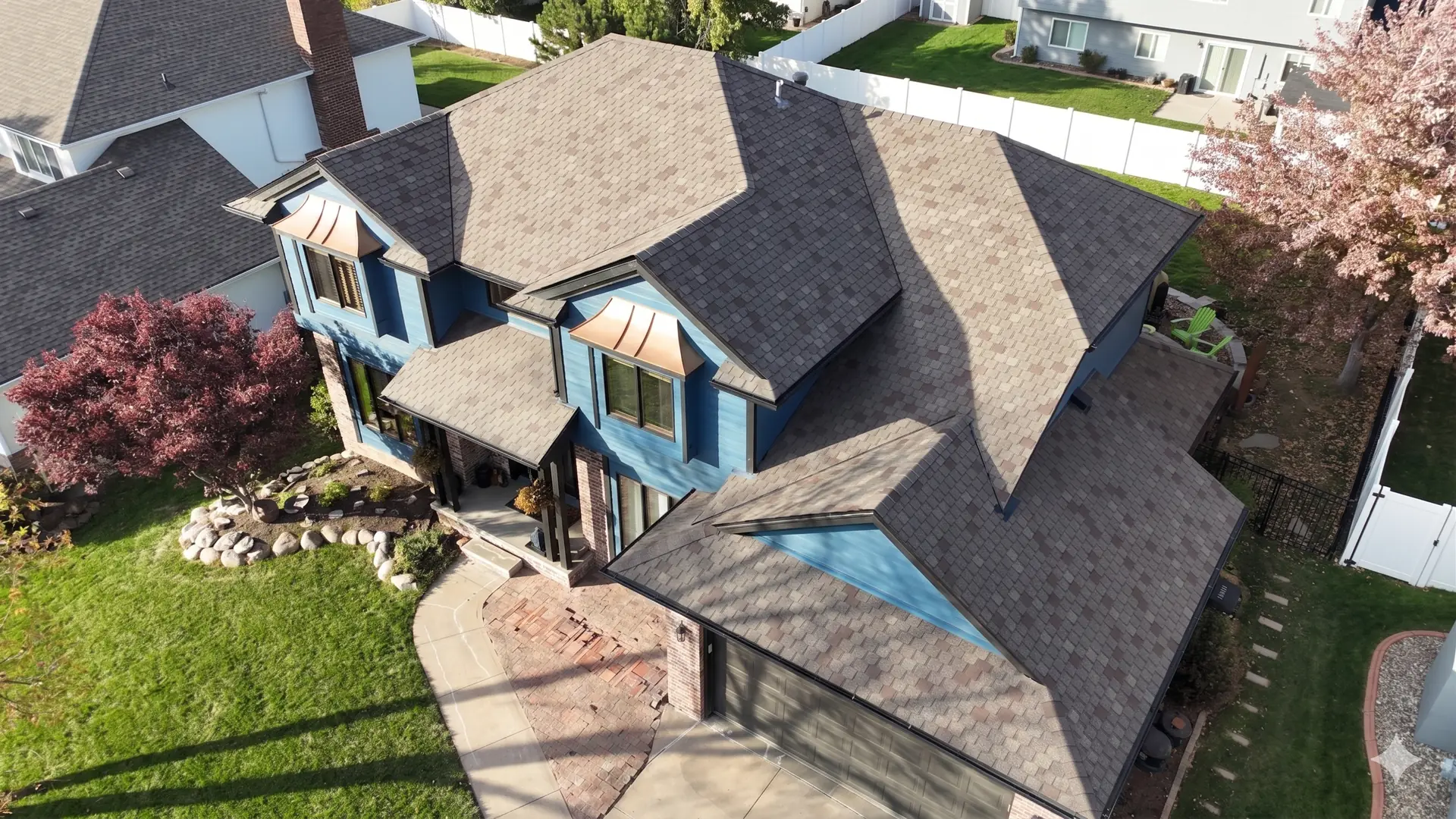
A roof leak in Kansas City often appears after heavy rain. Learn why it happens, what to look for, and when to call a roofer.
A roof leak in Kansas City usually doesn't appear during calm weather. It shows up hours or even days after a heavy rain, when water has had time to travel through layers of roofing material and reach your ceiling. Kansas City's summer storm pattern, including fast-moving July thunderstorms that can dump two inches of rain in under an hour, creates exactly the conditions that expose small, hidden roof vulnerabilities. In our experience inspecting roofs across the metro, the damage is almost never new. The storm just made it visible.
The Short Answer: Why Your Roof Leaks After Rain
A roof leak in Kansas City rarely punches straight through solid roofing material. It happens because water finds a path through cracked flashing, a dried-out pipe boot, a missing shingle tab, or a worn valley seal, and then travels sideways or downward before it drips into your living space. By the time you see a ceiling stain, the water may have moved several feet from the actual entry point. That's why a single summer storm can suddenly reveal a problem your roof has quietly been building for months.
What Homeowners Usually Notice First
Most homeowners dealing with a roof leak in Kansas City don't spot the problem from the outside. They see it from the inside: a brown ring on the ceiling, a bubble in the drywall, or a dark patch near a light fixture. Sometimes it's a slow drip onto the attic insulation that goes unnoticed until the stain bleeds through to the room below.
A few other early warning signs that often show up after a Kansas City summer storm:
- Water stains that appear on upper-floor ceilings within 24 to 48 hours of rain
- A musty smell in the attic after wet weather
- Paint bubbling or peeling near exterior walls on the top floor
- Damp insulation found during an attic check
What homeowners often miss is the lag time. Water entry and water appearance are rarely simultaneous. A storm rolls through Raytown or Independence, your attic picks up a small water intrusion, and three days later you're staring at a ceiling stain wondering where it came from. A roof leak in Kansas City homes often works that way. The storm was the trigger, but the underlying problem was already there.
What a Roofing Contractor Looks For
On many roof inspections after rain events, we find that the visible interior stain and the actual entry point are in completely different locations. Water is patient and directional. It follows roof deck slope, rafter lines, and insulation paths before it finds somewhere to drip.
When Capstone's crew gets on a roof to trace a roof leak in Kansas City, here's what we're actually evaluating:
Flashing integrity. Step flashing along dormers, chimney saddles, and sidewall transitions are the most common failure points. Flashing that has lifted, separated, or corroded lets water travel directly under the shingles and onto the deck.
Pipe boots and penetrations. Rubber boots around plumbing vents crack and shrink over time, especially after Kansas City summers where surface temperatures can exceed 150°F on a dark shingle. A cracked boot lets water run straight down the pipe and into the attic, and it's one of the most frequently missed sources of roof leak inspections.
Valley condition. Roof valleys collect and channel a significant volume of water during heavy rain. A worn valley liner or improperly lapped shingles in that zone will push water under the surface rather than directing it off the edge.
Shingle condition near the leak zone. Missing tabs, lifted corners, or granule loss directly above where the stain appeared tells us whether the entry point is a surface failure or a flashing issue.
Deck inspection. If we can access the attic, we look for daylight, water staining on the decking, or soft spots that indicate prolonged moisture exposure. A roof leak in Kansas City that has been running undetected for more than one storm cycle almost always leaves a trail on the decking.
A roofer evaluates all of this before calling a cause. Blaming the leak on the nearest shingle is one of the most common diagnostic errors we see on re-inspection work.
Common Mistakes That Make a Leak Worse
Sealing the visible spot and stopping there. Caulk applied to the surface of a shingle or around a vent cover is not a repair. It's a temporary cover over a system failure. We frequently re-inspect roofs where a previous patch job sealed one entry point while a second stayed open, and the homeowner is dealing with the same roof leak in Kansas City storms week after week.
Assuming no active drip means no damage. Lifted flashing, saturated decking, and compressed insulation can all exist without producing a visible drip, until the next storm pushes more water through. By that point the repair scope grows considerably.
Waiting for the leak to come back before acting. In Kansas City's July and August storm season, the next heavy rain is rarely more than a week away. A small entry point that produces a drip today can let in significantly more water during the next two-inch rainfall event. The cost difference between acting after the first sign of a roof leak in Kansas City and waiting for the second storm is rarely small.
Confusing condensation with a leak. Poor attic ventilation causes warm interior air to condense on the underside of cold decking in winter and can mimic the appearance of a water intrusion. A proper inspection distinguishes between the two, which matters because the fix is completely different.
What Happens When You Ignore the First Sign
Here's a scenario we see more often than we'd like. A homeowner in the Waldo neighborhood noticed a ceiling stain in their upstairs hallway about two days after a mid-July storm. They assumed it was minor, maybe a loose shingle, and planned to deal with it before winter. Three weeks later, another storm moved through. The stain doubled in size overnight, and a soft spot had developed in the drywall.
When we got on the roof, the entry point was a failed chimney saddle flashing that had been allowing water to track along the rafter for some time. The stain appeared in the hallway because that's where the rafter led, not where the water was entering. The repair cost at that point was significantly higher than it would have been after the first storm, because the decking underneath had absorbed enough moisture to require partial replacement.
That's the pattern with a roof leak in Kansas City. The first sign is rarely the worst of it. The worst of it shows up after the second or third storm, when there's no longer any question the problem is serious and the repair window has narrowed considerably.
Making the Right Call After a Storm
When you find water inside your home after a storm, the sequence matters more than the speed.
First, document what you see. Take photos of the interior stain, note the date the storm passed through, and check your attic if it's safe to do so. Look for wet insulation, water trails on the decking, or any daylight visible through the roof structure. That information is useful regardless of whether you pursue a repair directly or go through your insurance carrier later.
Second, get the roof inspected before the next weather system arrives. A roof leak in Kansas City during summer means you may have a short window between storm events. A contractor who can identify the actual entry point and provide a written scope of work gives you the information you need to make a confident decision about next steps.
Capstone documents visible damage, photographs every problem area, and prepares a detailed repair estimate. We don't make coverage determinations. That's your carrier's call. But we make sure you have clear, accurate documentation before you decide how to proceed.
Kansas City's Summer Weather Creates Real Roofing Pressure
Kansas City sits in a corridor that sees some of the most intense convective storm activity in the country. According to NOAA storm data, the Kansas City metro averages more than 50 severe weather events annually, including high-wind events, hail, and rainfall totals that arrive fast and overwhelm drainage systems designed for slower accumulation.
That matters for roofing because high-volume, fast-moving rain behaves differently than a steady drizzle. It overwhelms valley drainage, drives water horizontally under lifted shingles, and forces water through every small gap in the system at the same time. A roof that manages a light spring shower without showing any sign of trouble can reveal three separate entry points during a single July downpour, and each one is a potential roof leak in Kansas City homes that looked perfectly fine just days before.
Neighborhoods like Midtown Kansas City, Brookside, and the historic corridors of the Eastside are also home to older roofing systems, some approaching or past the 20-year mark on architectural shingles. Those systems carry more risk of storm-driven water intrusion than a roof installed in the last five years, and they deserve closer attention after every significant storm event.
Get the Inspection Done Before the Next Storm
If you've spotted a ceiling stain, a damp patch, or any sign of a roof leak in your Kansas City home after recent rain, the right move is to get eyes on the roof before the next storm arrives. Capstone Contracting Solutions inspects roofs across the Kansas City metro, identifies the actual entry point rather than just the visible symptom, and gives you a clear written repair scope so you know exactly what needs to happen. You can book a roof repair inspection before the next storm turns a small leak into a much bigger problem.
Visit us in Grain Valley, MO and let a local team that knows Kansas City roofs take a look before the next storm rolls through.
Frequently Asked Questions
Why does a roof leak in Kansas City often show up days after a storm rather than during it?
Water entering through a flashing gap, cracked pipe boot, or worn valley seal doesn't always drip immediately. It travels along rafters, decking, and insulation until it finds a low point. Depending on the roof structure, that journey can take hours or even a couple of days. By the time you notice a stain, the entry point may be several feet away from where the water is appearing inside your home.
How far can water travel inside a roof before it drips through my ceiling?
Much farther than most homeowners expect. Water entering near a chimney or dormer can travel six to ten feet along a rafter before it finds a low point to drip from. This is why the visible ceiling stain is almost never directly below the actual entry point. Tracing that path is one of the most important steps in a proper roof leak inspection, and it's why surface-only patches so often fail within a storm or two.
Should I wait until fall to fix a roof leak found during a Kansas City summer?
Not in Kansas City. July and August bring frequent storm cycles, and a small entry point that lets in a manageable amount of water during one event can let in significantly more during the next. Wet insulation loses its R-value, soft decking spreads, and mold can develop in warm attic conditions faster than most homeowners expect. Acting sooner narrows both the repair scope and the cost.
Will my homeowner's insurance cover a roof leak after a storm?
That depends on the cause, the age of your roof, and the specific terms of your policy. Capstone documents visible damage and prepares a written estimate, but coverage decisions are made entirely by your insurance carrier. Having clear documentation and a professional repair scope ready gives you the strongest starting point before you decide whether to file a claim.
Is every ceiling stain in my home caused by a roof leak?
Not always. HVAC condensate line failures, plumbing leaks, and ice dam damage from prior winters can all produce stains that look identical to a roof leak from the inside. An attic inspection combined with an exterior roof check usually clarifies the source. If there's no visible moisture trail or water entry point in the roof system, the cause may be mechanical or plumbing-related rather than a roofing issue.

Rebekah Saettone, Founder and CEO. Woman-owned roofing in Greater Kansas City since day one.