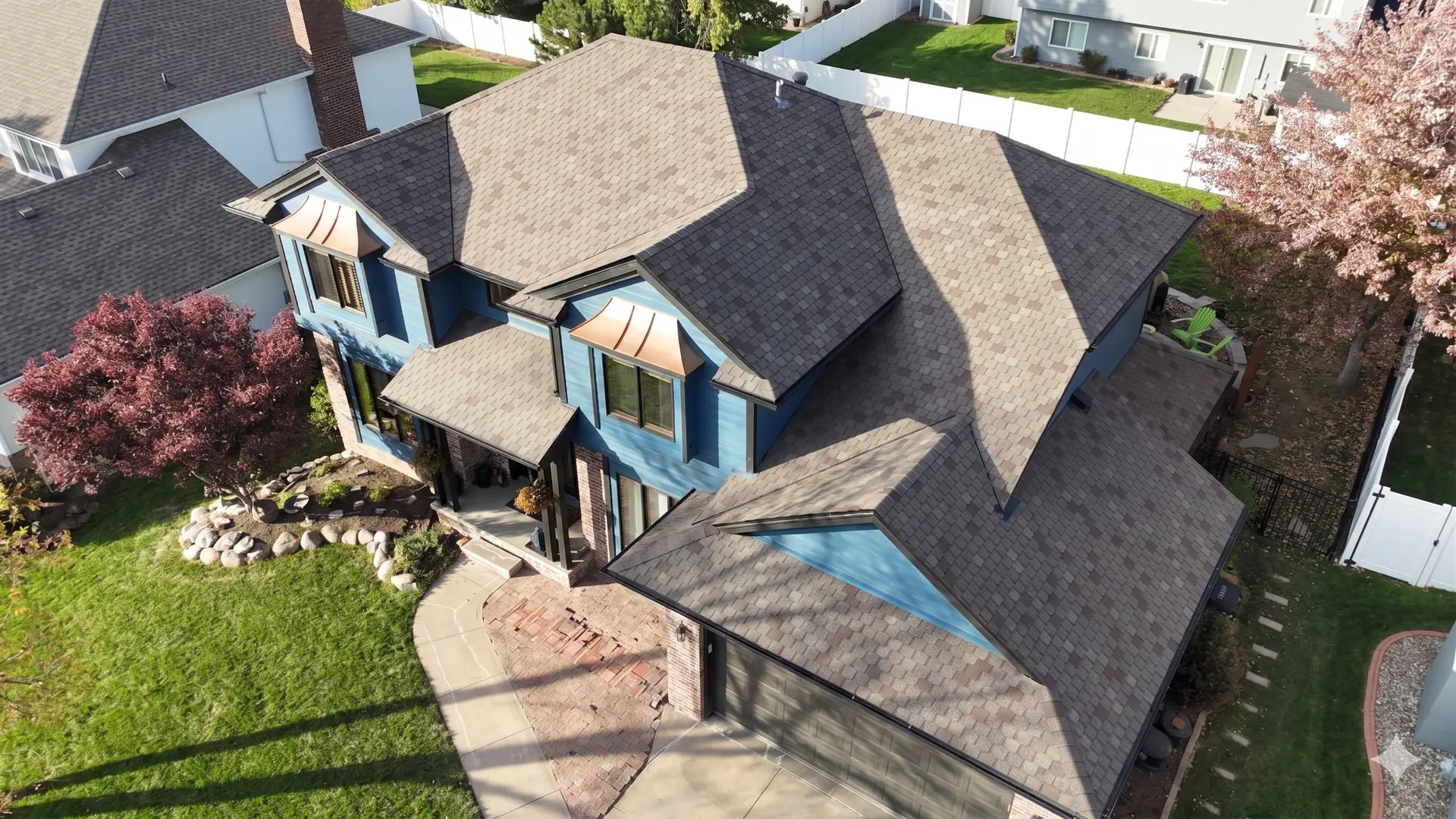
Need emergency roof repair in Grain Valley? Capstone Contracting Solutions offers fast, same-day storm response. Call today for help.
Emergency roof repair in Grain Valley usually means one thing: water is already getting inside your home. After wind storms roll through eastern Jackson County, we get calls within the hour from homeowners who heard a bang on the roof and then saw a stain spread across the ceiling. Here is what to do first, and what happens next.
How Fast Can You Get Emergency Roof Repair in Grain Valley?
If a storm damages your roof, call a licensed local roofer the same day. Most emergency roof repair in Grain Valley starts with a tarp to stop water from getting inside, followed by a full inspection once it is safe to get on the roof. A reputable contractor documents the damage with photos, checks the attic for leaks, and gives you a written estimate before starting permanent repairs. Same-day tarping is usually possible if you call before early afternoon. Full repairs depend on parts availability and weather, but most minor storm damage can be patched within 24 to 48 hours.
What Homeowners Usually Notice First
Most homeowners do not see roof damage first. They hear it, or they see the aftermath inside the house. A hard gust or a hailstone the size of a golf ball hits the roof, and the next sign is a brown ring on the bedroom ceiling two days later.
What homeowners often miss is how much granule loss shows up in the gutters before anything looks wrong on top. If you walk around your house after a storm and see gritty, sand-like debris pooling near the downspouts, that is shingle granule loss, and it usually means the shingle mat underneath has been exposed. That is one of the clearer early signs you need emergency roof repair in Grain Valley, even if the roof still looks fine from the driveway.
Other early clues include a musty smell in the attic, daylight visible through the roof deck in an unfinished attic space, and shingles that look curled or lifted at the edges. Homeowners in older Grain Valley neighborhoods, where roofs are closer to 15 or 20 years old, tend to notice these signs faster because the shingles were already brittle before the storm hit.
What A Roofing Contractor Looks For
On many roof inspections we see damage patterns that follow the direction the storm came from. If wind hit from the northwest, that is usually the side with the most lifted shingles and torn flashing. A roofer evaluates this by looking at the leading edge of each roof slope first, since that is where wind uplift and hail impact concentrate.
We start on the ground with binoculars, checking for missing shingles, exposed nail heads, and bent gutters. Bent or dented gutters are a strong clue that hail hit hard enough to bruise the shingles too, even if the shingles look okay from below. Once it is safe, we get on the roof and do a slope by slope check, looking at soft spots in the decking, granule loss patterns, and whether the seal strip on each shingle is still bonded.
What homeowners often miss is that flashing around chimneys, vents, and skylights fails before the shingle field does. These are the spots we check closest during any emergency roof repair in Grain Valley call, because a small gap in flashing lets water in fast, even on a roof that otherwise looks undamaged.
Inside the house, we check the attic for water staining on the rafters, wet insulation, and daylight coming through the roof deck. A flashlight and a moisture meter tell us more than a visual check alone. If we find soft or delaminated decking, that section needs to be replaced, not just re-shingled, or the repair will not hold through the next storm.
Common Mistakes Homeowners Make
The biggest mistake we see is waiting. Homeowners want to make sure the damage is "bad enough" before calling anyone, but a small leak today is a soaked ceiling and moldy insulation in two weeks. Water does not wait for you to decide.
The second mistake is climbing up to look for yourself. Wet shingles are slick, and storm-damaged decking can be softer than it looks. We would rather come out and check it safely than have a homeowner get hurt trying to save a service call.
A third mistake is signing with the first roofer who knocks on the door. After a bad storm, crews from out of state show up within a day or two, often before local homeowners have even filed a claim. Some of these crews do solid work. Others disappear once the check clears. Before you sign anything, ask for a local address, a Missouri business registration, and references from recent jobs in your area.
The fourth mistake is assuming a tarp is a fix. A tarp buys you time. It is not a substitute for real emergency roof repair in Grain Valley done by a contractor who checks the decking, flashing, and underlayment, not just the hole you can see.
How To Decide Between Repair And Replacement
Not every storm-damaged roof needs a full replacement, and not every repair is a long-term fix. The decision usually comes down to three things: how much of the roof is affected, how old the roof already was, and whether the decking underneath survived.
If damage is limited to one slope, isolated shingles, or a section around a chimney, targeted roof repair often makes sense here in Grain Valley, especially on a roof under 10 years old. If the roof is older, already showing granule loss across multiple slopes, or if more than one storm has hit it in the past two years, a full replacement is usually the more honest recommendation, even if it costs more upfront.
A roofer evaluates this by counting damage points across a test area, usually a 10 by 10 foot square, and comparing what they find slope by slope. If most slopes show a similar pattern of hits, that points toward replacement. If damage is isolated to one area, repair is often enough.
Ask your contractor to walk you through this math instead of just handing you a number. A written scope that explains what was found, slope by slope, gives you something to compare against a second opinion.
Grain Valley Weather And What It Means For Your Roof
Grain Valley sits in a part of Missouri that the National Weather Service's Pleasant Hill office watches closely every spring and fall, since this stretch of eastern Jackson County sits along a common storm track moving out of Kansas. NOAA's Storm Prediction Center has flagged this corridor for hail and damaging wind multiple times in recent years, and local events back that up. One storm that moved through the area brought gusts strong enough to damage Trailside RV Park and flip a semi-truck on R.D. Mize Rd, which gives you a sense of how much force these fall systems can carry even without a tornado warning attached.
September and October mark Missouri's secondary storm window, right behind the bigger spring season. It is easy to let your guard down once summer ends, but this is exactly when a fast-moving line of storms can knock a limb into your roof or drop hail large enough to bruise shingles. Homes built in the 1990s and early 2000s, common throughout Grain Valley, often have three-tab shingles that are more brittle by this point in their lifespan and more likely to crack under hail impact than newer architectural shingles.
That is exactly the kind of situation that calls for fast, reliable roof repair here in Grain Valley, not a wait-and-see approach. If your roof is nearing 15 to 20 years old, have it looked at before the next line of storms comes through, not after.
“I woke up this morning to rainwater coming into my house and had no idea who to call or what to do. I searched Google for the best roofer near me and Capstone Solutions came up right away. Rebekah, the owner of Capstone Solutions, showed up quickly and immediately helped stop the leak and handle the situation.”
Get Help Today
If your roof took a hit this week, do not wait for a bigger leak to force the decision. Capstone Contracting Solutions offers emergency roofing services with same-day inspections across Grain Valley and the surrounding area. We tarp what needs tarping, document what needs documenting, and give you a straight answer about repair versus replacement before you sign anything.
Call us for emergency roof repair in Grain Valley today. Visit us in Grain Valley, MO to see our current projects and talk through your options in person.
Frequently Asked Questions
How much does emergency roof repair in Grain Valley usually cost?
Emergency tarp-and-patch work typically runs a few hundred dollars, mainly labor and materials for a temporary fix. Permanent repair costs depend on the extent of damage, but a contractor should give you a written estimate before starting anything beyond the emergency tarp. If your damage came from a covered storm event, keep every receipt, since documented emergency work is often reimbursable under many homeowner policies, though coverage decisions are always up to your insurer.
Can I wait until my insurance adjuster comes out before getting a tarp?
No. Missouri policies generally expect homeowners to take reasonable steps to prevent further damage, which usually means tarping an active leak right away rather than waiting for an adjuster visit. Keep photos of the damage before you tarp it, and hold onto your tarping receipt, since insurers often reimburse that cost separately as an emergency mitigation expense.
How do I know if a roofing crew is a real local business or a storm chaser?
Ask for a physical business address, not just a phone number, and check whether they carry current liability insurance and any required Missouri municipal registration. A crew that pressures you to sign the same day, or offers to cover your insurance deductible, is a warning sign. Missouri law does not allow contractors to waive or discount your deductible as a sales incentive, so treat that offer as a red flag, not a bargain.
What is the difference between a repair and a full roof replacement after storm damage?
A repair addresses a specific damaged area, like a section of missing shingles or a flashing failure. A replacement addresses the whole roof system when damage is widespread or the roof was already near the end of its service life. A roofer evaluates this by checking damage across every slope, not just the side facing the street, since storm damage is not always visible from the ground.
How fast can Capstone Contracting Solutions get someone out for emergency roof repair in Grain Valley?
Most calls placed before early afternoon get a same-day tarp visit, weather permitting. Full inspections and written estimates typically follow within a day or two, depending on how many homes in the area were affected by the same storm. During widespread events, response times can stretch out simply because demand spikes across the whole Grain Valley and Blue Springs corridor at once.
Want our roofing tips to show up first when you search? Add us as a preferred source on Google.

Rebekah Saettone, Founder and CEO. Woman-owned roofing in Greater Kansas City since day one.