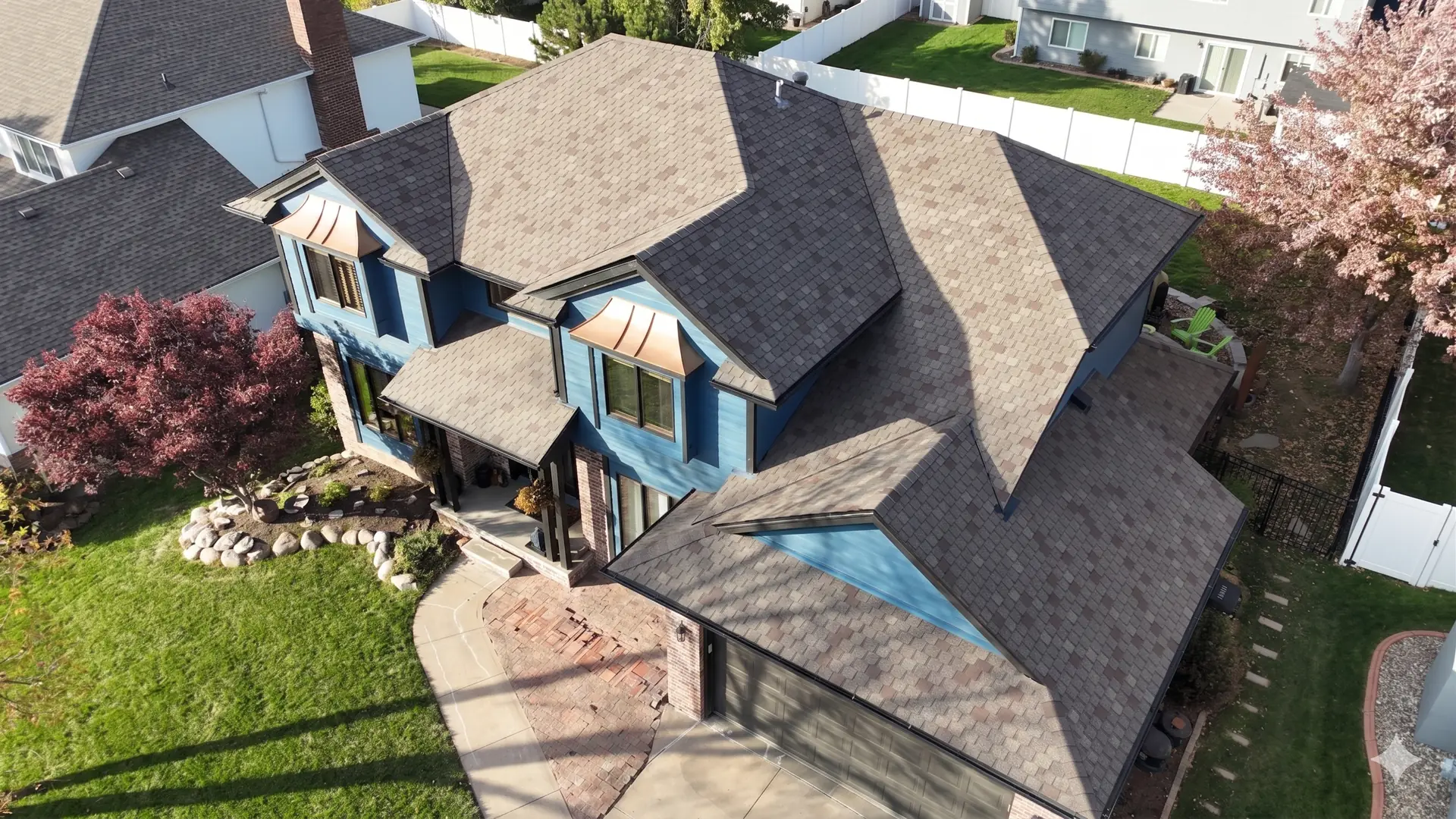
Get Capstone's Grain Valley roof inspection checklist to catch hail and wind damage before winter hits. Free, no-pressure inspections.
A Grain Valley roof inspection checklist should start on the ground, not the ladder: check gutters, flashing, and any granules pooling in downspouts first. After the golf-ball-sized hail that hit parts of the Kansas City metro on August 19, 2026, we walked roofs in Grain Valley that looked fine from the driveway but had bruised shingles up top. A fall inspection before winter makes it worse.
What's the Quick Answer for a Grain Valley Roof Inspection Checklist?
Walk your yard and check gutters for granules, look for dented soft metals like vents and gutters, and scan your ceilings for new stains. Then get a professional look at the shingles, flashing, and attic before the first freeze. Most hail and wind damage from Grain Valley's spring and late-summer storms isn't visible from the ground, so a ground check is a starting point, not a final answer. If you see any of the ground-level signs above, or if it's simply been a year or more since your last inspection, schedule a free roof inspection before winter weather makes repairs harder and more expensive to complete.
What Homeowners Usually Notice First
Most Grain Valley homeowners don't spot roof problems by looking up. They notice them somewhere else first: a stain spreading across a bedroom ceiling, granules collecting in a downspout after a storm, or a dented mailbox that makes them wonder if the roof took the same hit.
That's the pattern we see again and again. Hail doesn't announce itself on a roof the way it does on a car hood or a deck railing. Shingles absorb the impact instead of denting outward, so from the ground, a hail-bruised roof and a healthy one can look identical. Homeowners in older sections of Grain Valley, where many homes still carry original wood shake roofing, often notice something different: a shingle or shake curling at the edge, or daylight showing through a gap that wasn't there last fall.
Wind damage is a little more obvious. A missing shingle stands out, especially against a matching roofline. But partial wind lift, where a shingle's seal has broken but it hasn't blown off yet, is nearly impossible to see without walking the roof or using a drone. This is exactly why a Grain Valley roof inspection checklist has to go beyond a quick look from the yard.
What a Roofing Contractor Looks For
On many roof inspections we run in Grain Valley, the first thing we check isn't the shingles themselves. It's the gutters. Granule loss shows up there before it shows up anywhere else, and a gutter full of dark grit is often the first real clue that a storm did more than we can see from below.
From there, we work the roof in a specific order. Flashing around chimneys, vents, and skylights gets checked first, because that's where most leaks actually start, not in the open field of shingles. Then we look at the shingles themselves, checking for the small, dark, circular bruises that hail leaves behind, where the protective granules have been knocked loose and the fiberglass mat underneath is exposed. A single bruise isn't usually a problem. A cluster of them across one section of roof is a different story.
What homeowners often miss is the attic. We go up there with a flashlight and check for water stains on the underside of the decking, daylight coming through anywhere it shouldn't, and signs of poor ventilation, like heavy condensation on nail tips. A roof can look fine on top and still be failing from the inside, especially on older Grain Valley homes where insulation and ventilation haven't been updated in decades.
We also check soft metals, like vent boots and gutter edges, as a proxy for the whole roof. They dent more easily than shingles, so if they show hail hits, the shingles likely took the same impact, even if it's harder to see on the asphalt.
One Grain Valley homeowner recently called us after noticing a faint stain on a hallway ceiling and assuming it was an old, dried-up leak. When we got on the roof, we found a cracked pipe boot and granule loss from a storm that had come through months earlier. The leak wasn't old. It had been slowly active the whole time, and it was about to get worse once freezing temperatures started expanding that crack. That's the kind of problem a ground-level look will never catch.
Common Mistakes Homeowners Make
The biggest mistake we see is waiting for a leak before calling anyone. By the time water shows on a ceiling, the damage has usually been building for months. Roofing problems rarely start as leaks; they start as small breaches that worsen with every freeze-thaw cycle and storm that follows.
The second mistake is assuming that if the roof isn't leaking, it isn't damaged. Hail bruising, cracked pipe boots, and lifted shingle tabs can all exist for months without a drop of water reaching inside the house. That doesn't mean the roof is fine. It means the damage hasn't found its way in yet.
We also see homeowners confuse a repair estimate with an insurance decision. A free inspection and written scope of damage doesn't commit you to filing a claim. It just gives you the facts to decide, with a clear picture of what's actually there instead of a guess.
How to Decide What Your Roof Needs
Not every roof with some hail marks needs full replacement, and not every roof that looks fine needs nothing. The decision usually comes down to three things: how much of the roof shows damage, how old the roof already was before the storm, and whether the damage is functional or purely cosmetic.
A newer roof with a handful of isolated hail hits often just needs a targeted repair. A roof that's already 15 or more years old, with damage spread across multiple slopes, is a different situation. Even moderate hail can shorten what life the roof had left, and a patchwork of repairs on an aging roof rarely makes financial sense compared to planning for replacement.
This is where a written, photo-documented inspection matters. It gives you something concrete to make a decision from, rather than relying on how the roof looks from your driveway. That's the real purpose of a Grain Valley roof inspection checklist: not to talk you into work you don't need, but to give you an honest, documented answer either way.
Local Weather Context for Grain Valley Roofs
Grain Valley sits inside one of the more storm-active parts of the country. NOAA's Storm Prediction Center shows spring, March through May, is typically the Kansas City metro's most hail-active stretch. But storms don't stop there. The August 19, 2026 event, golf-ball-sized hail across the metro, shows late-summer and early-fall storms can still do real damage, right as homeowners shift focus to winter prep.
That timing matters for Grain Valley specifically. A roof that took a hit in August has now sat through several weeks of temperature swings before most homeowners even think to have it checked. Once nighttime temperatures start dropping toward freezing, any existing crack or bruise gets worse every time moisture inside it freezes and expands. Fall isn't just a convenient time for a roof inspection. It's the last reasonably mild stretch before that freeze-thaw cycle starts working against an already-weakened roof.
Older homes in and around Grain Valley add another layer to this. Original wood shake roofing, still common on some of the area's older properties, ages differently than asphalt and needs a different kind of inspection eye, one that's used to spot cupping, splitting, and moss growth rather than granule loss.
What to Do Before Winter Arrives
Following a proper Grain Valley roof inspection checklist before winter, rather than waiting for a problem to announce itself, is what keeps a small repair from turning into a bigger one. If your roof took a hit this year, or if it's simply been a while since anyone looked at it, fall is the window to act. Waiting until the first snow means working around weather, scheduling backlogs, and a much less comfortable job for everyone involved, including the crew on your roof.
Capstone offers free, photo-documented roof inspections across Grain Valley and the surrounding area. Rebekah and the team walk the roof themselves, so what you get is a direct, honest read on what's there, not a sales pitch. If you'd rather see the crew in person first, visit us in Grain Valley, MO, or call to schedule your free roof inspection before the weather turns.
Frequently Asked Questions
Should I get a roof inspection even if I don't see any damage from the ground?
Yes. Most hail and wind damage isn't visible without getting on the roof or using photo documentation. Granule loss, cracked pipe boots, and lifted shingle tabs can all sit unnoticed for months. If it's been over a year since your last inspection, or if your area saw hail or high wind this year, it's worth having someone take a direct look.
Does a roof inspection mean I have to file an insurance claim?
No. An inspection just gives you documented information about your roof's condition. What you do with that information, whether it's a small repair you pay for directly, a claim, or nothing at all, is entirely your call. A good inspection gives you options, not a decision that's already been made for you.
How long does a roof last after hail damage in Missouri if I don't get it inspected?
It depends on the roof's age and how much damage occurred, but the risk compounds over time. A bruised shingle with an exposed mat degrades faster under sun exposure, and any crack in flashing or pipe boots gets worse with every freeze-thaw cycle. A roof that could have needed a simple repair in the fall sometimes needs a full section replaced by spring if the damage goes unaddressed.
What's different about inspecting an older, wood shake roof versus a standard asphalt roof?
Wood shake ages differently. Instead of granule loss, we're looking for cupping, splitting, moss growth, and shakes that have started to separate at the edges. Many of Grain Valley's older homes still have original wood shake roofing, and it requires a different eye than a newer asphalt roof needs.
Why does Capstone check the attic during a roof inspection instead of just the shingles?
Because a roof can look fine on top and still be failing underneath. Water stains on the decking, daylight where there shouldn't be any, and poor ventilation are often visible from inside the attic before they show up as a ceiling stain. Skipping that step means missing part of the picture.

Rebekah Saettone, Founder and CEO. Woman-owned roofing in Greater Kansas City since day one.