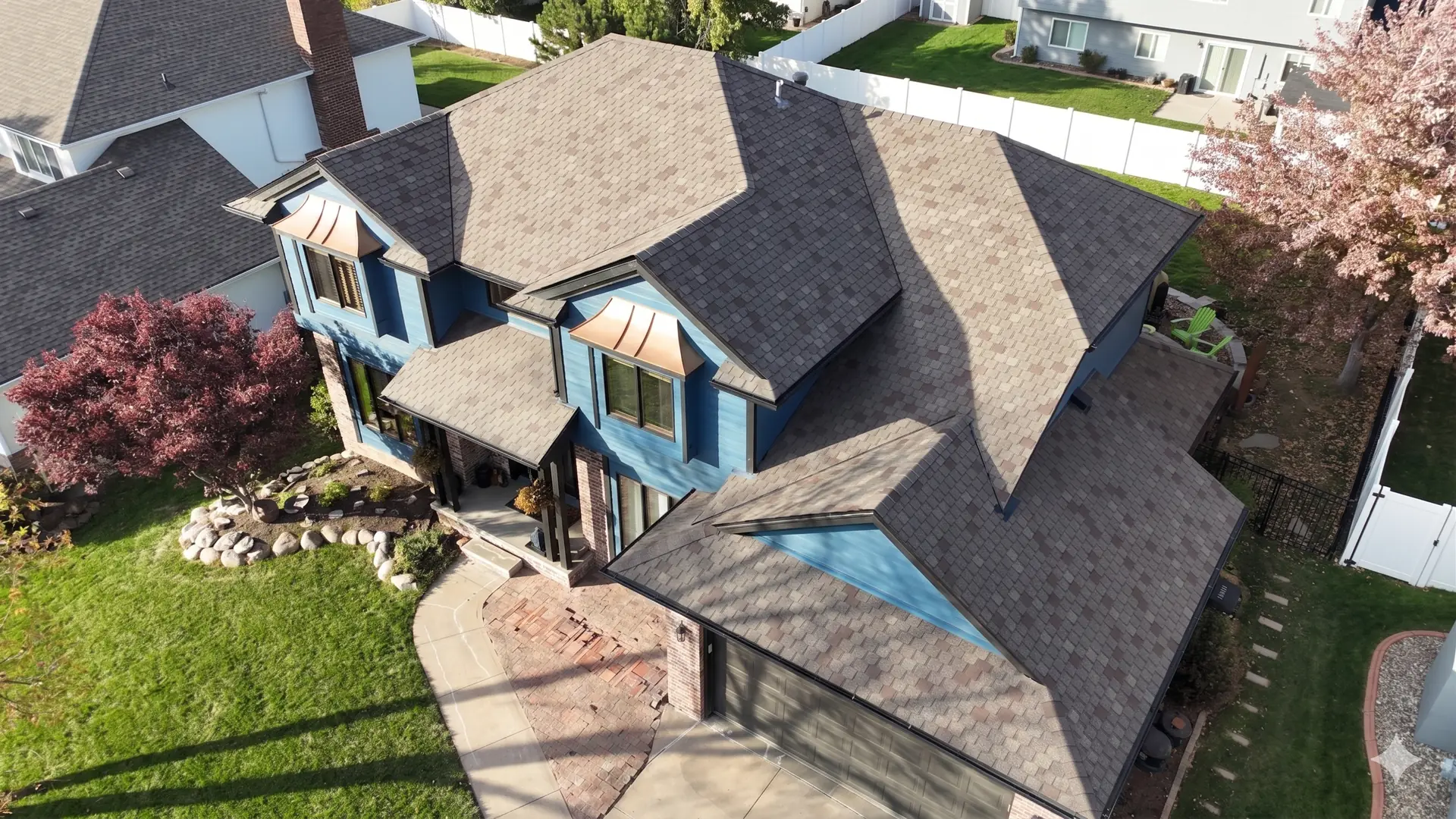
Gutter damage in Lee's Summit after a storm can lead to hidden water damage fast. Learn the warning signs before it gets worse.
Most homeowners in Lee's Summit look at their gutters twice a year at best, usually when something is obviously wrong. But gutter damage in Lee's Summit often develops quietly after a summer storm, showing up not as a broken gutter but as water pooling near the foundation, fascia boards that are soft to the touch, or a roofline that's draining in all the wrong places. Gutter damage in Lee's Summit after a July storm isn't always dramatic. It's often a collection of small failures that add up to a significant water problem by the time anyone notices.
The Short Answer: What Storm-Related Gutter Damage Looks Like
Gutter damage in Lee's Summit from a summer storm typically shows up as sections that have pulled away from the fascia, seams that have separated under the weight of debris-loaded water, downspouts that have disconnected or shifted, and gutter faces dented or bent by hail or falling branches. None of these failures cause immediate interior water damage, but each one redirects water in ways that damage your fascia, soffit, foundation, and landscaping. Left unaddressed through another storm cycle, each one gets worse.
What Homeowners Usually Notice First
Lee's Summit homeowners typically notice gutter damage in one of three ways: they see water pouring over the gutter edge during a storm rather than flowing to the downspout, they find the downspout disconnected at the base after a heavy rain, or they notice water staining on the siding below a gutter section during a post-storm walk around the house.
Other warning signs that are easy to miss:
- Gutter sections that are visibly sagging or sitting at a different pitch than before the storm
- Granules from shingles visible inside the gutter, which can indicate roofline impact damage above
- Water marks on the fascia board behind the gutter, suggesting overflow has been occurring
- Soft or darkened wood on the soffit near a gutter run, indicating water has been getting behind the gutter
- Soil erosion or mulch displacement directly below a downspout outlet
What homeowners often miss with gutter damage in Lee's Summit is that the gutter is part of a larger drainage system that includes the roofline, the fascia, the soffit, and the foundation perimeter. When one part of that system fails, the others take on water they weren't designed to handle.
What a Roofing Contractor Looks For
On many post-storm inspections in Lee's Summit, we find that gutter damage and roofline damage go together. The same wind event that peels a gutter section away from the fascia often lifts the drip edge or shifts the flashing at the eave. Evaluating gutter damage in Lee's Summit homes means looking at the entire roofline system, not just the gutter channel itself.
Here's what Capstone assesses during a gutter and roofline inspection after a storm:
Gutter attachment points. Gutters are secured to the fascia with hangers or spikes at regular intervals. High wind and the weight of debris-loaded water can pull these attachment points loose, causing the gutter to drop away from the fascia at one or more locations. We check every attachment point along the gutter run for looseness, pulling, or corrosion at the fastener.
Seam and joint integrity. Sectional gutters have seamed joints that are sealed with gutter sealant. That sealant degrades over time and can fail under the stress of a storm. A failed seam leaks water directly onto the fascia board behind it, which is one of the most common causes of hidden fascia rot that homeowners don't find until the wood is badly compromised.
Downspout connections and outlet condition. Downspout sections connect at elbows and run down the wall to a ground-level outlet. High wind can separate these connections or shift the downspout position. We check every connection point and confirm that the outlet is directing water away from the foundation rather than pooling against it.
Drip edge and fascia condition. The drip edge is the metal strip that runs along the eave and directs water from the roof deck into the gutter. If the drip edge has been lifted, bent, or pulled away from the deck, water can run behind the gutter entirely and soak the fascia. We check the drip edge condition along the full roofline as part of every gutter damage inspection in Lee's Summit.
Soffit and fascia water damage. If gutter overflow or a failed seam has been directing water onto the fascia, we look for softening, discoloration, or swelling in the wood. Fascia rot starts from behind, so what looks like surface staining can indicate deeper moisture penetration that requires board replacement before new gutters can be properly secured.
A roofer evaluates gutter damage in Lee's Summit as part of the full roofline system. Replacing a gutter section without addressing the drip edge or fascia behind it is a partial fix that will fail again.
How Lee's Summit Summer Storms Stress Gutters Specifically
Lee's Summit sits in a position that sees both the high-wind events common to the eastern Jackson County corridor and the heavy rainfall totals that come with slow-moving summer storm systems. According to NOAA data, the Kansas City metro area, including Lee's Summit, has recorded multiple two-inch-plus rainfall events in single storm passes during July and August in recent years.
That matters for gutter damage in Lee's Summit because gutter systems are sized based on average rainfall intensity for a given area. A standard five-inch K-style gutter can handle a moderate rain rate without overflowing, but during a two-inch-per-hour cloudburst, even a properly functioning gutter system is at or near capacity. Add debris accumulation from tree debris and shingle granules, and the system can back up, overflow, and place significant weight stress on the attachment points along the fascia.
Older homes in Lee's Summit, particularly in established neighborhoods near the Summit Woods and Lakewood areas, often have older gutter systems with sectional construction and aged sealant joints that are more vulnerable to this kind of stress than newer seamless gutter installations.
A Scenario We See Every Season in Lee's Summit
A homeowner near the Highlands area called us in mid-July after noticing water staining on their brick siding below a second-floor gutter run. They assumed the gutter was just clogged and planned to clean it themselves. When we inspected, the gutter wasn't clogged at all. A seam had separated about four feet from the downspout outlet, and water had been leaking directly onto the fascia board during every rain event for what appeared to be several weeks.
The fascia behind that section had softened significantly, and the bottom edge was showing early rot. The gutter itself was structurally fine, but the failed seam had caused fascia damage that required board replacement before the gutter could be properly reattached. What started as a gutter seam repair became a fascia replacement job because the damage had time to progress.
That's how gutter damage in Lee's Summit compounds. It's quiet, it's hidden behind the gutter face, and by the time the staining or overflow becomes obvious, the wood behind it has often already taken on water for weeks.
Common Mistakes After Storm-Related Gutter Damage
Cleaning the gutter without inspecting the attachment. A clean gutter that is pulling away from the fascia is still a failure point. We see post-storm cleanups that remove debris but leave loose hangers, separated seams, and misaligned downspout connections untouched.
Reattaching a gutter to rotted fascia. Screwing a gutter back into a fascia board that has already begun to rot gives a false sense of repair. The fastener won't hold in softened wood, and the gutter will pull away again under the first significant load. The fascia has to be addressed before the gutter is reattached.
Ignoring the roofline while fixing the gutters. Gutter damage in Lee's Summit storms frequently coincides with drip edge displacement and eave flashing issues above it. Fixing the gutter without checking the roofline above it means water can still reach the fascia from above, making the gutter repair temporary at best.
Assuming gutter damage is a DIY fix. Reattaching a gutter section at height, resetting a drip edge, or replacing a fascia board are tasks that require the right equipment, fasteners, and knowledge of how the roofline system connects. An improper reattachment can accelerate fascia damage and create a worse situation than the original storm left behind.
What to Do After a Lee's Summit Storm
Walk the perimeter of your home after any significant storm and look at the gutterline from the ground. You're looking for visible sag, sections that have pulled away from the fascia, downspout connections that have separated, and water staining on the siding directly below any gutter run. If you see any of these, the next step is an inspection, not a DIY fix.
Document what you find with photos before any work is done. Note the date of the storm and keep a record of the weather event for reference. This is useful whether or not an insurance conversation follows.
Capstone inspects the full roofline and gutter system after storm events across Lee's Summit and the surrounding Jackson County area. We document visible gutter damage in Lee's Summit properties, check the fascia and drip edge condition, and provide a written scope of what needs to be repaired and in what order.
Ask Capstone to Inspect Your Gutters and Roofline Before Water Causes Hidden Damage
If your Lee's Summit home went through a summer storm and you haven't had the gutters and roofline checked, the next rain event is reason enough to act. Capstone Contracting Solutions evaluates full gutter systems and the roofline components connected to them, gives you a clear picture of what gutter damage in Lee's Summit has done to your home, and prepares a written repair scope before water works its way further into the fascia and soffit. Get started by scheduling a gutter and roofline inspection before hidden water damage becomes visible structural damage.
Visit us in Grain Valley, MO, we're close to Lee's Summit and ready to inspect before the next storm rolls through.
Frequently Asked Questions
How do I know if I have gutter damage in Lee's Summit after a storm, or just a clog?
A clog causes water to back up and overflow over the front edge of the gutter during heavy rain. Gutter damage in Lee's Summit from a storm produces different symptoms: water leaking from a seam or joint rather than overflowing the top, sections that have visibly pulled away from the fascia, or downspout connections that have separated and are directing water against the wall. If the overflow happens in the same spot every time it rains and there's no visible debris, the issue is likely structural rather than a blockage.
Can gutter damage in Lee's Summit lead to foundation problems?
Yes, and it's one of the most underestimated consequences of deferred gutter maintenance. When a downspout disconnects or a gutter section pulls away from the fascia, water that should be channeled away from the home is instead being deposited directly at the foundation perimeter. Over multiple storm cycles, this saturates the soil against the foundation, increases hydrostatic pressure against basement or crawlspace walls, and can contribute to water intrusion and long-term structural settlement. Catching gutter damage early is genuinely a foundation protection issue, not just a cosmetic one.
Should my insurance cover gutter damage from a Lee's Summit storm?
That depends on your policy and the cause of the damage. Sudden storm damage, including wind and hail damage to gutters, is generally a covered peril under standard homeowner policies, but the specific terms vary. Capstone documents visible gutter damage and provides a written repair estimate. Coverage decisions are made by your insurance carrier based on their review. Getting the damage inspected and documented promptly gives you the best position before deciding whether to file.
How often should gutters be inspected in Lee's Summit?
At minimum, gutters should be inspected twice a year: once in late spring after the most active storm season, and once in late fall before winter. After any significant storm event, a visual walk around the perimeter is worth doing even between scheduled inspections. Gutter damage in Lee's Summit that gets caught early, before fascia rot sets in or foundation saturation begins, is almost always a straightforward repair. The same damage left through another season becomes a more involved and more expensive project.

Rebekah Saettone, Founder and CEO. Woman-owned roofing in Greater Kansas City since day one.