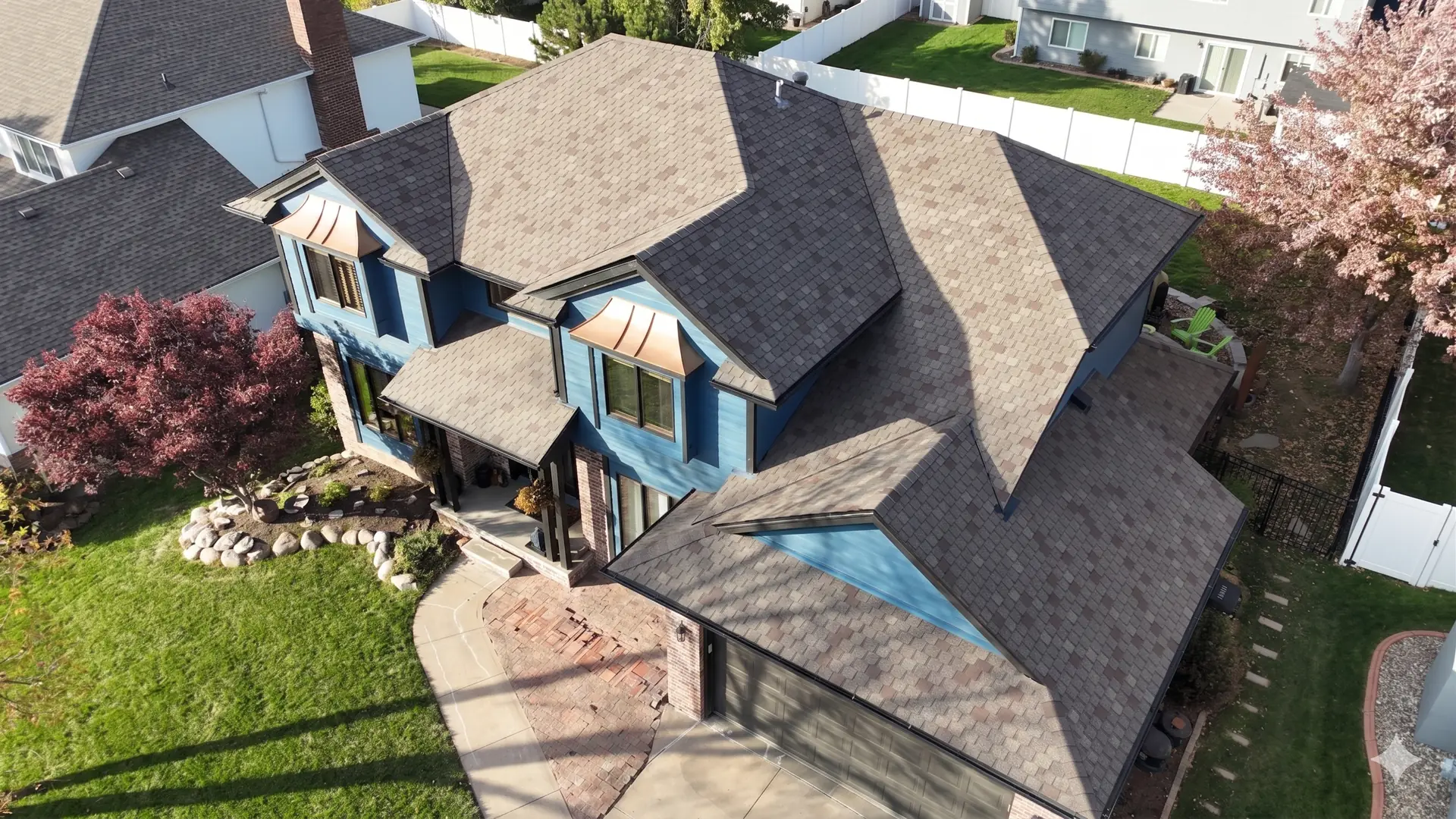
Hail damage in Grain Valley often goes unnoticed for weeks. Learn the late signs to look for and when to call a roofer.
Hail damage in Grain Valley doesn't always make itself known right away. After a storm rolls through Jackson County, most homeowners walk outside, scan the yard for debris, and if the roof looks intact from the ground, they move on. What they don't see are the bruised shingles, fractured granule bonds, and compromised flashing joints that a hailstorm leaves behind. Those problems don't announce themselves immediately. They show up weeks or months later, usually right after the next heavy rain, when it's harder to connect the damage back to the original storm.
The Short Answer: What Late Hail Damage Actually Looks Like
Hail damage in Grain Valley homes often goes undetected because the signs aren't visible from ground level and don't produce a leak right away. What you're looking for is granule loss concentrated in impact patterns, soft spots or bruising on shingle surfaces, cracked or displaced ridge caps, dented flashing at valleys and penetrations, and granule buildup in your gutters that wasn't there before the storm. None of these produce an immediate drip, but each one shortens your roof's remaining lifespan and creates an entry point for the next rain event.
What Homeowners Usually Notice First
Most Grain Valley homeowners who eventually discover hail damage weren't looking for it. They find it by accident, usually during a gutter cleaning, after a rainstorm produces a ceiling stain, or when a contractor points it out during an unrelated visit.
The most common late discoveries include:
- Granules collecting in gutters or downspout outlets weeks after a storm
- A ceiling stain that appears after a rain event one to three months post-storm
- Visible dark spots or bare patches on shingles noticed from an upper-floor window
- Shingle tabs that feel soft or spongy when pressed, indicating subsurface bruising
The challenge with hail damage in Grain Valley is that a visual check from the driveway doesn't tell you much. Asphalt shingles can absorb significant hail impact without cracking or shifting. The damage is happening at the granule bond layer, and that's not something you can see from thirty feet below.
What a Roofing Contractor Looks For
On many hail inspections in Grain Valley and the surrounding Jackson County area, we see roofs that homeowners believed were undamaged because there was no leak and no obviously missing material. The damage was there. It just required being on the roof to find it.
When Capstone gets on a roof to assess hail damage in Grain Valley, here's what the inspection actually involves:
Impact pattern mapping. Hail hits uniformly across a roof surface, so genuine hail damage appears in a scattered but consistent pattern across every exposed face of the roof. We look for circular impact marks on shingles, soft spots that compress under thumb pressure, and exposed mat underneath where granules have been knocked free. If the damage is limited to one area or follows a debris trail, the cause is likely something other than hail.
Granule loss assessment. Every asphalt shingle has a granule layer that protects the underlying mat from UV exposure and water penetration. Hail impact dislodges granules at the point of contact. We assess the density and distribution of granule loss across the field of the roof, the ridge caps, and the hip lines. Heavy granule loss in an impact pattern is one of the clearest indicators of hail damage in Grain Valley roofs.
Flashing and metal component inspection. Hail leaves dents on soft metals. We check valley flashing, pipe boot collars, step flashing along dormers, and HVAC curbs for impact marks. Dented metal components are some of the most reliable evidence of a hail event, because metal doesn't dent from foot traffic or debris the same way it does from hail impact.
Ridge cap condition. Ridge caps sit at the highest point of the roof and take hail impact from multiple angles. Cracked, displaced, or granule-stripped ridge caps are a consistent finding on roofs that sustained hail damage in Grain Valley storms.
Gutter inspection. We check the inside of gutters for granule deposits and look for denting along the gutter face and downspout collars. Heavy granule accumulation inside a gutter after a storm is a strong indicator that the shingles above took significant impact.
A roofer evaluates all of this as a pattern, not as isolated findings. One soft spot on one shingle doesn't confirm a hail event. A consistent pattern of impact marks, granule loss, and dented metal across the entire roof surface does.
Why Grain Valley Gets Hit Harder Than Homeowners Expect
Grain Valley sits in the eastern Jackson County corridor where storm cells coming off the plains frequently intensify before making contact with the Kansas City metro. The area sees its most severe hail activity between April and September, with July storms often producing the largest hail stones because of the heat-driven convective energy that builds during summer afternoons.
According to NOAA storm event data, Jackson County has recorded dozens of significant hail events in the past decade, with stone sizes ranging from pea-sized to golf ball diameter. Hail damage in Grain Valley from a single storm can affect entire subdivisions without producing a single emergency call, because the damage pattern is subtle enough that most homeowners don't recognize it until a follow-on rain event causes a leak weeks later.
That lag between impact and visible symptom is what makes July such a critical month for roof inspections in this area. Spring storms may have already done their work by the time summer arrives.
Common Mistakes Homeowners Make After a Hail Storm
Waiting for a leak before calling anyone. Hail damage in Grain Valley rarely produces an immediate leak. The damaged shingles continue to shed water for a period after impact, but their ability to do so degrades with every subsequent rain event. By the time a leak appears, the damage has typically progressed beyond what could have been a straightforward repair.
Relying on a ground-level inspection. Standing in the driveway and scanning the roofline tells you almost nothing about hail damage. The impact patterns that matter are only visible from the surface of the roof itself. What looks intact from below can have significant granule loss and bruising across the entire field.
Assuming hail damage is only relevant if insurance is involved. Even homeowners who have no intention of filing a claim need to understand the condition of their roof after a storm. Hail damage in Grain Valley shortens shingle lifespan, voids some manufacturer warranties when not addressed, and creates compounding vulnerability with every subsequent storm. Knowing the condition of your roof is a maintenance decision, not just an insurance decision.
Delaying documentation past the insurance filing window. Most homeowner policies carry a claim filing window after a storm event. In Missouri, that window varies by policy, but waiting too long can eliminate the option entirely. Getting the roof inspected and documented soon after a storm keeps your options open.
A Scenario We See Every Season
A Grain Valley homeowner on the south side of town called us in early August after noticing granules in their downspout during a routine yard cleanup. They'd had a hailstorm come through in late June but hadn't thought much of it at the time because the roof looked fine and there was no leak.
When we inspected, the roof showed a clear hail damage pattern consistent with a late-spring storm: scattered impact bruising across the south and west faces, significant granule loss on the ridge caps, and two dented pipe boot collars. The decking was still sound, and the shingles were still shedding water, but the granule layer was compromised enough that another storm season would likely push the roof into active leak territory.
We documented the damage with photographs, noted the storm date based on the homeowner's records, and prepared a written repair estimate. The homeowner had the information they needed to decide how to proceed. That's what a proper hail damage inspection in Grain Valley should produce: clarity, not pressure.
What to Do If You Suspect Late Hail Damage
If a storm passed through Grain Valley in the last several months and you haven't had the roof inspected, here's the practical sequence to follow.
Check your gutters first. Run your hand along the inside of a gutter section and feel for granule grit that wasn't there before. If your downspout outlet is accessible, look for granule accumulation at the base. That's your first indicator that something worth investigating may have happened above.
Note the storm dates. Your carrier will want to know when the storm occurred. NOAA's storm events database is publicly accessible and can confirm hail events by date and county if you don't have exact records.
Get the roof inspected before filing anything. A written inspection report with photographs gives you an accurate picture of the damage and a documented scope of work. Capstone inspects, photographs, and documents visible hail damage in Grain Valley properties and provides a detailed repair estimate so you have accurate information before making any decisions about next steps.
Get Your Roof Documented Before Deciding Your Next Step
If you think your Grain Valley home may have taken hail damage this season, the right move is to get a professional inspection before another storm adds to the problem. Capstone Contracting Solutions is based right here in Grain Valley and inspects roofs across Jackson County and the wider Kansas City metro. We document visible hail damage in Grain Valley properties with photographs and a clear written estimate, so you have everything you need to make an informed decision. Start by booking a hail damage inspection and get your roof documented before deciding your next step.
Visit us in Grain Valley, MO, we're a local team inspecting local roofs, and we know what Grain Valley storms leave behind.
Frequently Asked Questions
How do I know if my Grain Valley home has hail damage if there's no leak?
The absence of a leak doesn't mean the absence of hail damage in Grain Valley. Bruised shingles, granule loss, and dented flashing components all constitute damage even without active water intrusion. A roof with significant granule loss is operating on borrowed time. The granule layer is what protects the underlying mat from UV degradation and water penetration. Once it's compromised, the shingle's remaining lifespan drops considerably. A professional inspection is the only way to know what's actually there.
How long after a hailstorm can I still file an insurance claim?
That depends entirely on your policy. Most homeowner policies in Missouri carry a one to two year filing window from the date of the storm event, but some are shorter. The important thing is that hail damage in Grain Valley that goes undocumented and uninspected becomes harder to attribute to a specific storm over time. Getting the roof inspected and photographed promptly keeps your options open. Capstone provides inspection documentation and a written estimate, but coverage decisions are made by your insurance carrier.
What's the difference between hail damage and normal shingle wear?
Normal wear produces gradual, uniform granule loss across the entire surface, especially on south-facing slopes exposed to more UV. Hail damage in Grain Valley produces concentrated impact patterns, circular areas of granule loss, soft spots under pressure, and a distribution of damage that mirrors the storm's trajectory. Dented metal components are one of the clearest distinguishing factors, because normal wear doesn't dent flashing or gutter faces the way hail does.
Should I get a roof inspection even if I'm not planning to file a claim?
Yes. Hail damage in Grain Valley affects your roof's performance and lifespan regardless of whether a claim is involved. Some manufacturer warranties also require documented maintenance and damage reporting. Knowing the condition of your roof after a storm is a maintenance decision that protects your investment, independent of any insurance consideration.

Rebekah Saettone, Founder and CEO. Woman-owned roofing in Greater Kansas City since day one.