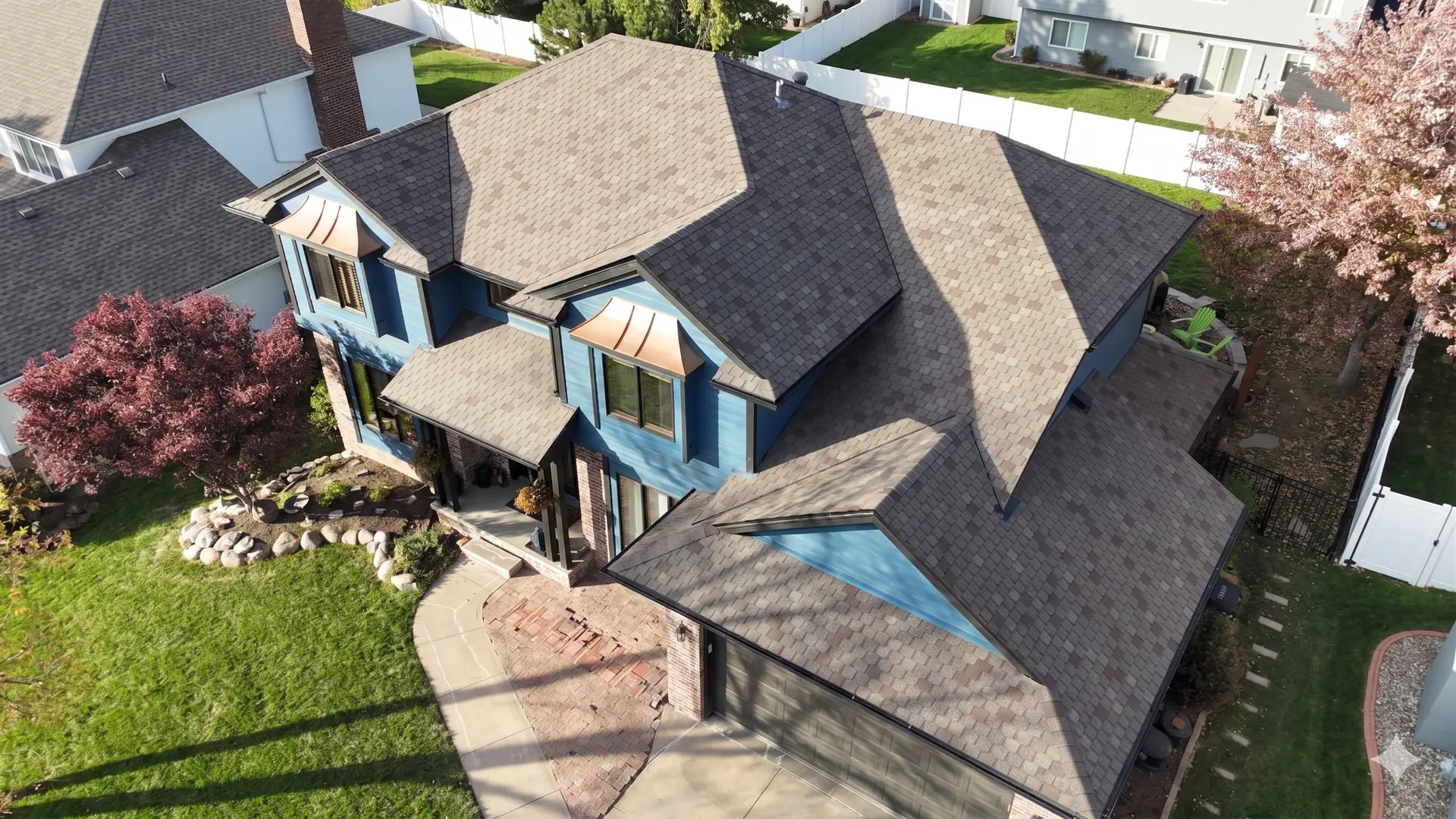
Get a thorough roof inspection in Blue Springs from Capstone Contracting Solutions. Free reports, honest advice, and fall scheduling are now open.
A roof inspection in Blue Springs should never feel like a mystery. Fall is when we book the most inspections all year, right before the rain and freeze cycles that hit older shingles the hardest. Homeowners near downtown Blue Springs, where roofs tend to run 15 years or older, often wait until a stain shows up to call. This guide walks through what a real inspection covers and why timing matters.
What Does A Roof Inspection In Blue Springs Cover?
A full roof inspection in Blue Springs covers three areas: the shingle field, the flashing points, and the attic. A roofer checks for granule loss, curling shingles, and lifted seal strips on the surface. Flashing around chimneys, vents, and skylights gets checked separately, since that is where most leaks start. Inside the attic, the inspector looks for water staining, wet insulation, and daylight coming through the decking. A written report should note exactly what was found on each slope, not just a general pass or fail.
What Homeowners Usually Notice First
Most Blue Springs homeowners do not notice roof problems until something shows up inside the house. A brown ring on the ceiling, a musty smell in a closet under the attic, or a slow drip during heavy rain are usually the first signs something is wrong.
What homeowners often miss is how much can be happening on the roof itself before any of that shows up indoors. Granules collecting in the gutters, shingles that look slightly darker or patchy in one section, or a soft spot near a valley are all signs worth a closer look, even if nothing has leaked yet.
What A Roofing Contractor Looks For
On many roof inspections in Blue Springs, we start on the ground before ever touching a ladder. Binoculars let us spot missing shingles, bent flashing, and sagging gutter lines from the driveway. That first pass tells us where to focus once we get on the roof.
A roofer evaluates the roof slope by slope, checking granule loss patterns, seal strip adhesion, and whether shingles are still lying flat against the deck. On older Blue Springs homes with three-tab shingles, we pay close attention to the south and west-facing slopes, since those take the most direct sun and tend to age faster than the shaded sides.
What homeowners often miss is the condition of the underlayment at roof valleys, where water concentrates during heavy rain. A roofer evaluates this by lifting the shingle edge slightly at the valley seam to check for cracking or brittleness in the material underneath, something you cannot see just by looking at the surface.
Inside the attic, we check rafters and decking with a flashlight and a moisture meter. Wood that feels soft or spongy under light pressure usually means water has been getting in for a while, even if there is no visible stain yet. We also check insulation depth and look for signs of pest activity near roof penetrations, since gaps large enough for water are often large enough for squirrels too.
We also check ridge and soffit vents during a roof inspection in Blue Springs, since poor attic airflow shortens shingle life from underneath, not just from sun and weather on top. A hot, poorly ventilated attic bakes the underside of the shingles all summer, which shows up later as premature cracking and granule loss that has nothing to do with a storm. On homes with older bathroom fans venting straight into the attic instead of outside, we flag that separately, since trapped moisture there causes its own set of problems come winter.
Nail patterns matter too. Shingles that were nailed too high, or with a nail gun set at the wrong pressure, tend to fail years before they should, and it shows up as a distinct diagonal pattern of lifted shingles across a slope. Catching that pattern during an inspection tells us the original installation was rushed, which changes how we advise the homeowner going forward, since a repair on a poorly installed roof does not hold the same way it would on a well-installed one.
Common Mistakes And Misunderstandings
The most common mistake is assuming a roof is fine because it looks fine from the ground. Shingle damage, especially hail bruising and granule loss, is often invisible unless you are standing on the roof or using a ladder to get close.
Another mistake is treating a roof inspection in Blue Springs as a one-time event tied only to buying or selling a house. Roofs age unevenly. A section shaded by a large tree wears differently than a section that gets full sun all day. Annual or biannual inspections catch problems while they are still small and cheap to fix.
A third misunderstanding is thinking every inspection should lead to a sales pitch for a full replacement. A written inspection should separate what needs attention now from what can wait, with clear reasoning for each item. If every inspection ends in "you need a new roof," that is worth a second opinion.
A fourth mistake, one we see often after a windy week, is homeowners assuming a roof inspection in Blue Springs is only worth scheduling after visible damage shows up. By the time shingles are visibly missing or a ceiling stain appears, the underlying problem has usually been developing for months. A roof inspection in Blue Springs done on a schedule, rather than only in response to a scare, catches wear while it is still cheap to address.
How To Decide What To Do With Your Results
Once you have an inspection report, the decision usually comes down to age, extent, and location of the damage. Isolated issues, like a cracked pipe boot or a few missing shingles near a ridge, are usually quick repairs regardless of roof age.
Widespread granule loss, multiple soft spots in the decking, or a roof already past 20 years old point toward planning for full replacement, even if nothing has leaked yet. A roofer evaluates this by weighing repair cost against remaining roof life. Spending a few hundred dollars on a roof that has three or four good years left makes sense. Spending that same money patching a roof that is already failing in multiple spots usually does not.
Ask for the reasoning behind any recommendation, not just a price. A contractor who explains why a repair will or will not hold up gives you something to compare against other opinions.
We also tell homeowners to factor in what is happening around the damaged area, not just the damage itself. A single cracked pipe boot next to otherwise healthy shingles is a simple fix. That same cracked pipe boot next to shingles already showing granule loss and curling edges is a signal that the whole slope is aging out together, and patching just the boot will leave you calling us back again within a year or two. A thorough roof inspection in Blue Springs should always note the condition of the surrounding material, not just the specific failure point someone called about.
Blue Springs Weather And What It Means For Your Roof
Blue Springs sits close enough to Grain Valley that the two towns share almost the same storm exposure, both watched by the National Weather Service office in Pleasant Hill during spring and fall severe weather season. NOAA's Storm Prediction Center has repeatedly flagged this stretch of eastern Jackson County for hail and damaging wind, and local storm history backs that up, including a fall system strong enough to damage a nearby RV park and flip a semi-truck on a county road.
We inspected a home near downtown Blue Springs last fall where the homeowner had noticed granules piling up near a downspout after a windy week. The roof was 17 years old with three-tab shingles, and once we got on the roof, we found soft decking near a valley that had not shown up as a leak yet. Catching it during a routine roof inspection in Blue Springs meant a repair instead of a bigger job after the first hard rain of the season.
September and October are the best months for this kind of check, since Missouri's secondary storm season overlaps with the last stretch of mild weather before winter freeze cycles start stressing older shingles further.
Schedule Your Inspection
If your roof has not been checked in the past year, or if you noticed granules in the gutters after the last windstorm, do not wait for a leak to force the issue. Capstone Contracting Solutions offers roof inspection services across Blue Springs and the surrounding area, with a written report that explains exactly what we find and why it matters.
Schedule your free roof inspection in Blue Springs today. Visit us in Grain Valley, MO to see recent project photos and talk through what a fair inspection should include.
Frequently Asked Questions
How often should I get a roof inspection in Blue Springs?
Most roofs benefit from a check once a year, ideally in early fall before winter freeze cycles set in. Homes with roofs older than 15 years, or homes that sit under large trees, often do better with inspections twice a year, since debris buildup and shaded moisture speed up wear in ways a once-a-year check can miss.
Does a roof inspection cost anything if I am not planning to replace my roof right away?
Many local contractors, including us, offer free inspections regardless of whether you end up needing work done. A free inspection should still come with a real written report, not just a verbal opinion, so you have something to reference later or compare against a second opinion.
Will my homeowners insurance cover repairs found during an inspection?
That depends entirely on your policy and the cause of the damage. Wear and gradual aging are typically not covered, while sudden storm damage often is. A contractor can document what they find and note whether it looks storm-related, but the coverage decision always belongs to your insurance company, not the roofer.
What is the difference between a home inspector checking the roof and a dedicated roof inspection?
A general home inspector usually gives the roof a quick visual check from the ground or a ladder, often as one small part of a much longer report. A dedicated roof inspection in Blue Springs involves a contractor actually getting on the roof, checking the attic from the inside, and testing suspect areas by hand, which catches problems a general walkthrough tends to miss.
Can I do a basic roof inspection myself before calling a professional?
You can check the ground-level basics yourself, like gutters full of granules, visibly missing shingles, or daylight in the attic. Climbing onto the roof itself is where we would stop you. Wet or aging shingles are more slippery and less stable than they look, and it is not worth the risk to save the cost of a professional inspection.
Want our roofing tips to show up first when you search? Add us as a preferred source on Google.

Rebekah Saettone, Founder and CEO. Woman-owned roofing in Greater Kansas City since day one.