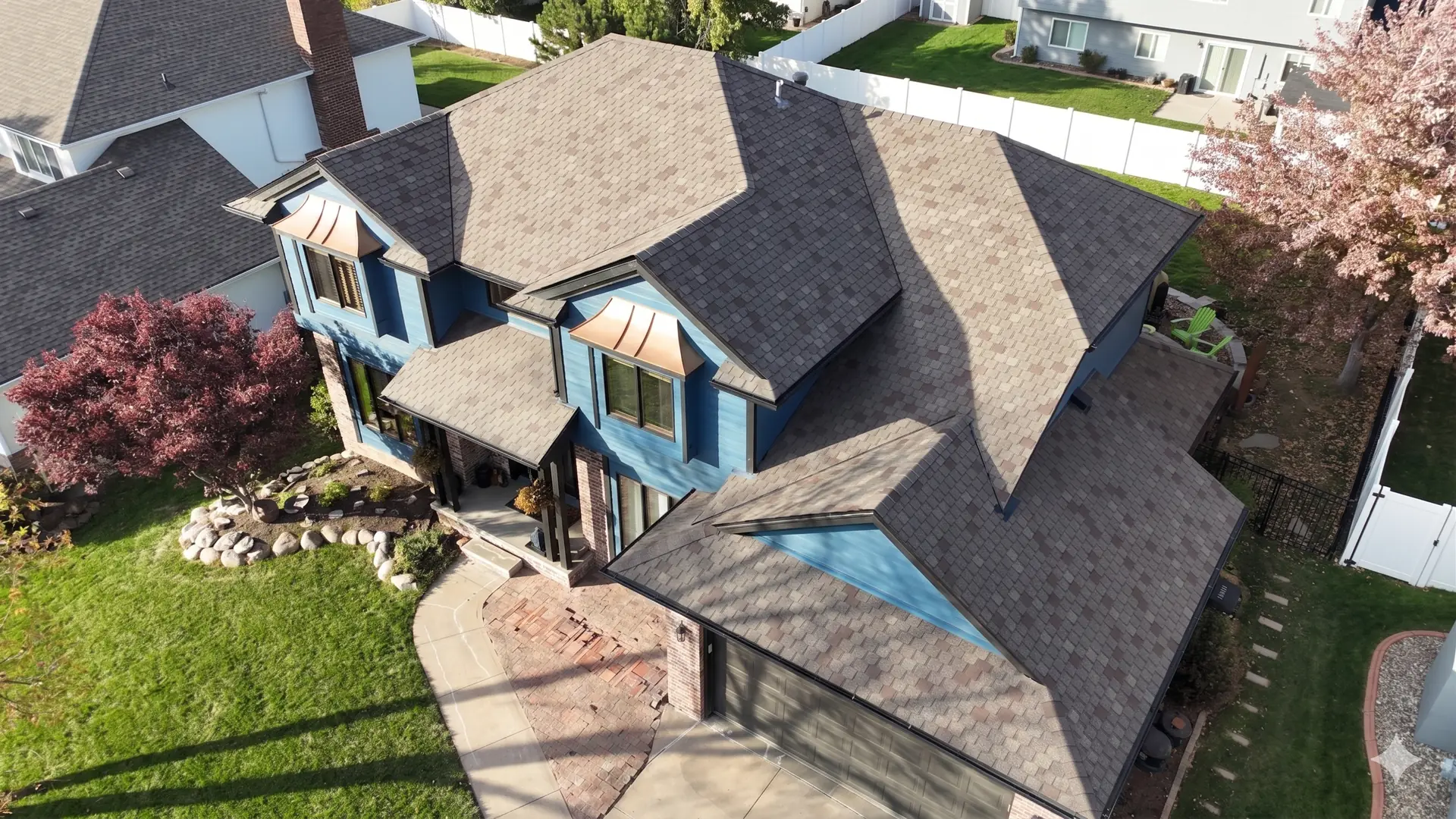
A roof inspection in Independence can reveal damage older roofs hide well. Learn what we check before fall rain and winter freeze cycles.
Independence has some of the oldest housing stock in the eastern Kansas City metro, and that history shows up clearly during a roof inspection in Independence. Homes built in the 1960s through the 1980s often have roofing systems that have been re-covered once or twice already, with layers of repairs hiding the actual condition of what's underneath. Late summer is when these hidden issues matter most, because what looks stable in August often isn't ready for the freeze-thaw cycles that start arriving by December.
The Short Answer: What Older Roofs Are Hiding
A roof inspection in Independence on an older home frequently uncovers problems that aren't visible from the ground or even from a casual walk on the roof: compressed or deteriorated flashing that's been painted over or caulked repeatedly, decking that has soft spots from years of slow moisture intrusion, ventilation systems that were never updated to match modern attic insulation standards, and shingle layers stacked from previous repairs that are masking the true age and condition of the roof. These issues don't always cause an active leak yet, but they significantly shorten the window before one develops, especially heading into Independence's wetter fall season.
What Homeowners Usually Notice First
Most Independence homeowners with an older roof don't notice anything is wrong until something forces the issue: a leak after a storm, a sagging section noticed from the street, or a contractor mentioning concerns during an unrelated visit like gutter cleaning or siding work.
Signs that an older roof may be hiding bigger problems:
- Shingles that look uniformly faded and granule-thin across the entire roof, suggesting the surface has reached the end of its protective life
- Visible waviness or unevenness along roof planes, which can indicate decking that has softened or sagged over time
- Multiple patch repairs visible in different areas, suggesting a pattern of addressing symptoms rather than root causes
- Moss or algae growth concentrated in shaded areas, which retains moisture against the shingle surface longer than direct sun exposure allows
- An attic that feels noticeably hotter than expected in summer, which can point to inadequate or blocked ventilation
What homeowners often miss is that a roof inspection in Independence isn't just about checking for active damage. On older homes, it's about understanding how much functional life is actually left, because the visible surface can look reasonably intact while the structure underneath is quietly degrading.
What a Roofing Contractor Looks For on an Older Roof
On many inspections of homes in Independence built before 1990, we find a layered history of repairs that previous owners or contractors made without addressing the underlying cause. Each layer hides a little more of the actual condition.
Here's what a thorough roof inspection in Independence actually involves on an older home:
Layer count and tear-off history. We check whether the roof has one or multiple layers of shingles, which affects both the inspection process and any future replacement scope. Multiple layers can also trap moisture between layers in ways that aren't visible from the surface.
Flashing condition at every transition. Older homes often have flashing that has been patched with roofing cement or caulk multiple times over the years rather than properly replaced. We look underneath these patch jobs where possible to assess whether the original flashing material has corroded or separated beneath the surface repair.
Decking integrity through attic access. This is one of the most important steps on an older home. We check the underside of the decking from the attic for water staining, soft spots, and daylight visible through nail holes or gaps, none of which are visible from a surface-level roof walk.
Ventilation adequacy. Many older Independence homes were built with ventilation standards that don't match current attic insulation levels, especially in homes that have had insulation added or upgraded over the years without a corresponding ventilation update. Inadequate ventilation accelerates shingle aging from the underside and can contribute to moisture buildup in the attic.
Chimney and skylight seal condition. Masonry chimneys on older homes settle slightly over time, which can open small gaps at the flashing interface that aren't present on newer construction. We pay particular attention to these areas because they're a common entry point on homes of this age.
Gutter and drainage pattern assessment. Older homes sometimes have drainage patterns that were adequate for original roofing materials but don't account for decades of landscaping changes, added downspout extensions, or shifted grading. We assess whether water is actually draining away from the structure as intended.
A roofer doing a proper roof inspection in Independence on an older home treats every layer of previous repair as a clue, not just a completed task. Understanding what was patched and why tells us a lot about what's likely still failing underneath.
Common Mistakes Homeowners Make With Older Roofs
Assuming "no active leak" means the roof is fine. Many of the issues we find during inspection of older Independence homes haven't caused a leak yet, but they're close. Compressed flashing, marginal decking, and inadequate ventilation are all conditions that precede a leak, sometimes by years and sometimes by a single bad storm.
Continuing to patch instead of evaluating the whole system. We frequently inspect roofs that have five or six visible patch repairs from over the years, each addressing a specific leak as it appeared without ever stepping back to assess whether the roof as a whole had reached the point where patching no longer made financial sense.
Skipping the attic check during a DIY assessment. A homeowner who walks the roof from the ground or even gets on the roof themselves is missing the most informative part of an older roof inspection. The attic side of the decking tells a story that the shingle surface often hides.
Waiting for fall to address issues found in late summer. Independence sees a meaningful uptick in rainfall during September and October compared to the driest parts of summer, and freeze-thaw cycles begin affecting marginal roofing components by December. Issues identified in August have a real window to be addressed before conditions make repairs more difficult and more urgent.
Why Late Summer Matters for Independence's Older Housing Stock
Independence's older neighborhoods, including areas like the historic Square district and the established residential sections off Noland Road, have a meaningful share of homes with roofing systems installed two or even three decades ago. Even roofs that have been re-covered once since original construction are often approaching or past their second expected service life.
According to NOAA regional climate data, the Kansas City metro sees a noticeable shift toward wetter, more sustained rain events starting in September, a contrast to the shorter, more intense summer thunderstorms typical of June and July. For a roof with marginal flashing or decking issues, this shift matters because sustained rainfall tests weak points differently than a fast, heavy downpour does. Water has more time to find its way through small gaps when rain persists over hours rather than arriving and clearing within thirty minutes.
By December, freeze-thaw cycling becomes a factor as well. Water that has worked its way into small gaps in flashing or decking can freeze, expand, and widen those gaps, turning a minor issue into a more significant one by the time spring arrives.
A Common Scenario in Independence's Older Neighborhoods
A homeowner near the Independence Square area contacted us in late August for what they described as routine maintenance ahead of fall. Their roof was original to the home, installed in the late 1990s, and had no known active leaks. They simply wanted peace of mind before winter.
During the inspection, we found two areas of concern that weren't visible from the ground. The decking near a bathroom exhaust vent penetration had a small soft spot, indicating slow moisture intrusion around a degraded boot seal that hadn't yet progressed to an interior leak. We also found that the original ridge vent was significantly undersized for the attic's current insulation level, which had been upgraded at some point without a corresponding ventilation adjustment.
Neither issue required full roof replacement, but both needed attention before they progressed. The pipe boot was replaced, the decking around it was assessed and found stable enough to avoid full replacement, and we discussed ventilation upgrade options for a future project. This is a fairly typical outcome for a roof inspection in Independence on a home in this age range: not a crisis, but real issues that are far easier and cheaper to address while they're still small.
Making the Decision: Repair, Monitor, or Plan for Replacement
After a thorough inspection, older Independence homes generally fall into one of three categories. Some have isolated issues, like a failing pipe boot or a section of compromised flashing, that can be repaired without addressing the whole roof. Others have more widespread but still moderate concerns, where targeted repairs combined with a plan to monitor specific areas makes sense for now, with replacement likely in the coming years. And some have reached the point where the cumulative wear across the whole system means a roof inspection in Independence reveals that patch repairs would just be delaying an unavoidable replacement.
Capstone gives you an honest assessment of which category your roof falls into, along with photos and documentation of exactly what we found, so you can plan your next steps with accurate information rather than guesswork.
Schedule a Roof Inspection Before Hidden Wear Becomes a Leak
If your Independence home has an older roof and you haven't had it inspected recently, late summer is the ideal window to find out what's actually happening underneath the surface, before fall rain and winter freeze-thaw cycles turn a manageable issue into an active leak. Capstone Contracting Solutions provides thorough roof inspections that go beyond a surface-level walk, checking flashing, decking, ventilation, and every transition point that older roofs are prone to hiding problems in. Schedule a roof inspection today and get a clear, documented picture of your roof's actual condition before winter arrives.
Visit us in Grain Valley, MO, we serve homeowners throughout Independence and the eastern Kansas City metro.
Frequently Asked Questions
How often should an older home in Independence get a roof inspection?
We recommend an annual inspection for any roof over 15 years old, with an additional check after any significant storm event. A roof inspection in Independence on an older home catches the kind of slow-developing issues, like marginal flashing or early decking wear, that don't show symptoms until they've progressed significantly. Annual inspections also give you a documented history of your roof's condition over time, which is useful for both maintenance planning and any future insurance conversations.
Can a roof inspection in Independence tell me how much life is left in my roof?
A thorough inspection can give you a realistic estimate based on the condition of the shingles, the decking, the flashing, and the ventilation system, though it's an estimate rather than an exact countdown. Factors like granule loss density, flashing corrosion, and decking moisture readings all contribute to that assessment. We provide this kind of honest evaluation so you can plan financially for a future replacement rather than being caught off guard by a sudden failure.
Is it worth fixing small issues on an old roof, or should I just plan to replace it?
This depends on the overall condition of the roof and how many issues are present. A single isolated problem, like one failing pipe boot, is almost always worth repairing on an otherwise sound older roof. But if an inspection reveals multiple areas of concern across the roof system, putting money into repairs may just delay a replacement that's coming regardless. We give you a straightforward assessment of which situation applies to your specific roof.
What's the biggest hidden problem you find during roof inspections on older Independence homes?
Ventilation mismatches are one of the most common and most overlooked issues. Many older homes have had insulation upgraded over the decades without a corresponding update to attic ventilation, which can accelerate shingle aging from underneath and contribute to moisture problems that aren't always obvious until decking damage has already started. It's not as dramatic as a visible leak, but it has a real impact on how long a roof actually lasts.

Rebekah Saettone, Founder and CEO. Woman-owned roofing in Greater Kansas City since day one.