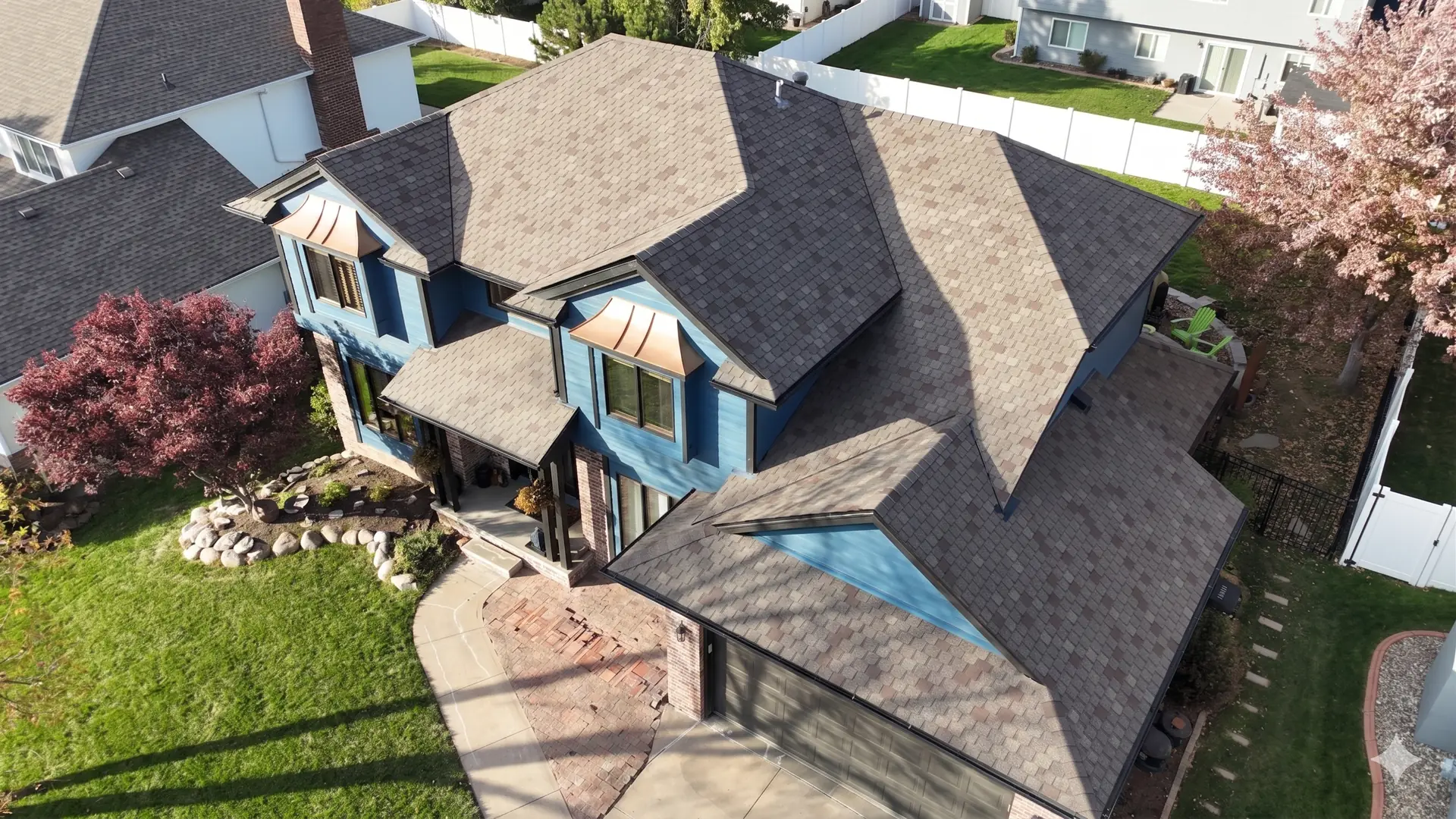
Roof repair in Blue Springs after a storm needs to happen fast. Learn what damage to look for and why acting early saves money.
Summer storms in Blue Springs don't give much warning. A line of thunderstorms can move through Jackson County in under an hour, dropping heavy rain, pushing wind gusts past 60 mph, and leaving behind lifted shingles, displaced flashing, and small leaks that look minor from the ground but aren't. Roof repair in Blue Springs after a storm isn't just about fixing what's visibly broken. It's about finding what the storm started before the next one finishes it.
The Short Answer: Why Early Roof Repair After a Storm Matters
Roof repair in Blue Springs needs to happen quickly after a storm because storm damage rarely stays contained. A lifted shingle tab creates an opening. The next rain drives water under it. That water reaches the deck, the insulation, and eventually your ceiling. What starts as a fifteen-minute repair job becomes a multi-layer restoration if left through another storm cycle. Acting early keeps the scope of the work narrow and the cost manageable.
What Homeowners Usually Notice First
Most Blue Springs homeowners spot storm damage one of two ways: they find something in the yard that came off the roof, or they notice a ceiling stain after the next rain. Neither of these is the earliest possible warning sign, but they're the ones that get attention.
Other signs that show up after a Blue Springs summer storm and often get overlooked:
- Shingle tabs visible from the ground that are curled, lifted, or sitting at an angle
- Granules washing out of downspouts during or after rain
- Gutters that have pulled away from the fascia or are sitting at a new angle
- Flashing that is visible and appears to have separated from a chimney or sidewall
- A soft or spongy feel underfoot if you walk on a lower roof section or porch cover
What homeowners often miss is that storm damage in Blue Springs tends to show up in clusters. Wind and hail don't pick one shingle. They stress the entire surface, and the weakest points give way first. If you find one lifted tab, there are almost certainly others nearby that are on the edge.
What a Roofing Contractor Looks For
On many post-storm inspections in Blue Springs and the surrounding eastern Jackson County area, we find that the damage visible from the ground is only part of the picture. The more consequential damage is at the transitions: where the roof plane meets a wall, where a valley channels water, where a pipe penetrates the surface.
When Capstone gets on a roof for storm-related roof repair in Blue Springs, here's what the inspection covers:
Wind uplift damage. High wind creates a pressure differential across the roof surface that lifts shingle tabs at their weakest bond points. We look for tabs that have broken the sealant strip seal, corners that are raised, and areas where wind has displaced entire shingles or exposed the underlying felt. Roofs with shingles that were already at the end of their adhesive life are particularly vulnerable to wind uplift during a Blue Springs summer storm.
Flashing displacement. Step flashing, counter flashing at chimney bases, and apron flashing above dormers can all be pulled or shifted by wind. Even a small separation at a flashing joint is enough to let water bypass the waterproofing layer during a heavy rain event. We check every transition point on the roof, not just the areas directly above where a stain appeared inside.
Valley integrity. Open and closed valleys channel significant water volume during heavy rain. We look for shingles that have shifted to expose the valley liner, gaps in the metal valley where joints have separated, and any debris or blockage that could cause water to back up under the shingle edges.
Decking condition. Where shingles have lifted or been displaced entirely, we inspect the underlying decking for moisture absorption, soft spots, and any signs that water has been sitting on the surface. Roof repair in Blue Springs that involves decking damage needs to address the structural layer, not just the surface.
Gutter and fascia connection. Wind can pull gutters away from the fascia board, which creates a gap at the roofline where water can run behind the gutter and onto the fascia and soffit. We check the gutter attachment along the entire roofline, not just the sections that look obviously displaced.
A roofer doing a thorough post-storm inspection evaluates each of these systems as part of a whole, because storm damage rarely happens in isolation.
Why Blue Springs Storm Patterns Create Specific Roofing Risk
Blue Springs sits in a weather corridor that sees regular severe storm activity between May and September. The city's position in eastern Jackson County puts it in the path of storm cells that have built energy crossing the open plains before reaching the Kansas City metro. According to NOAA storm data, the Blue Springs area has recorded multiple high-wind and large hail events in recent years, with wind gusts in the 60 to 75 mph range during the most significant summer storms.
That wind speed matters for roof repair in Blue Springs because most standard architectural shingles are rated for winds up to 110 mph under ideal installation conditions, but real-world performance depends heavily on the age of the shingle adhesive, the quality of the original installation, and the number of previous storm cycles the roof has been through. A roof that's eight to ten years old and has weathered several significant storm seasons is going to behave very differently in a 65 mph wind event than a roof installed two years ago.
Subdivisions in the eastern Blue Springs area and along the MO-7 corridor also tend to carry homes built in the 1990s and early 2000s, meaning a significant portion of roofing stock in the area is approaching or past the point where storm resistance starts to decline meaningfully.
A Scenario That Plays Out Every Summer
A Blue Springs homeowner off Adams Dairy Parkway contacted us after a mid-July storm. They'd found two shingle tabs in the backyard and could see from the ground that a section of ridge cap looked out of place. They assumed it was a small fix and weren't in a rush.
When we inspected, the ridge cap displacement had exposed a six-foot section of the underlying felt layer. The felt was intact, but three of the tabs in that area had broken their sealant bonds and were sitting loose on the deck. More importantly, the step flashing along the chimney on the same roof face had shifted during the wind event, creating a gap at the base that would direct water straight onto the deck during the next rain.
The repair scope covered the ridge cap, the loose tabs, and the flashing reset. It was a manageable job completed in one visit. If the homeowner had waited through another storm, the exposed deck section would have absorbed water, the flashing gap would have allowed direct intrusion onto the decking, and what was a repair became a replacement conversation on that section of the roof. Roof repair in Blue Springs handled early is almost always a fraction of the cost of the same job handled late.
Common Mistakes That Turn Repairs Into Bigger Problems
Replacing only the shingles that are visibly missing. Replacing a few tabs without addressing the flashing, sealant, and deck condition underneath means the repair is addressing the symptom rather than the system. We regularly see re-inspection work where previous repairs failed within one or two storm cycles because the underlying cause wasn't touched.
Using roofing caulk as a long-term fix. Caulk applied to lifted flashing or around a displaced shingle edge will hold through a light rain but rarely survives a full Kansas City summer storm. It expands and contracts with temperature, breaks down under UV exposure, and gives homeowners false confidence that a real repair has been made.
Skipping the attic check. Roof repair in Blue Springs that doesn't include an attic inspection is an incomplete assessment. Water that entered through a lifted shingle or displaced flashing may have already reached the decking or insulation below. Finding that during the repair is far better than finding it six months later when mold has developed or the deck has softened.
Making the Decision: Repair or Replace?
Not every storm produces replacement-level damage, and not every roof with storm damage needs to come off. Roof repair in Blue Springs makes sense when the damage is localized, the underlying decking is sound, the shingles outside the damaged area still have meaningful life left, and the flashing and penetration seals can be properly reset.
Replacement starts to make more sense when the storm damage is spread across multiple roof faces, when the shingles are already near the end of their rated lifespan, when decking damage is found in multiple locations, or when a pattern of previous repairs means the roof has been patchworked to the point where another repair is just delaying the inevitable.
Capstone provides a clear repair scope and an honest assessment of both options. We document the visible damage, photograph every problem area, and give you accurate information so you can make the right call for your home and your budget. We don't make coverage decisions. That's between you and your carrier. But we make sure you have everything documented before you decide how to proceed.
Fix It Before the Next Storm Does It For You
If your Blue Springs home took storm damage this summer and you haven't had the roof inspected yet, the next storm event is the reason not to wait. Capstone Contracting Solutions inspects roofs across Blue Springs and the eastern Jackson County area, identifies every damaged component rather than just the obvious ones, and delivers a written repair scope so you know exactly what needs to be done and why. Book a roof repair inspection and get ahead of the next storm before it turns a manageable fix into a much larger problem.
Visit us in Grain Valley, MO, we're local to the area and know exactly what Blue Springs storm seasons do to roofs.
Frequently Asked Questions
How quickly should I arrange roof repair in Blue Springs after a storm?
As soon as the weather is safe to allow an inspection. Storm damage in Blue Springs tends to compound quickly because summer brings frequent follow-on rain events. A lifted shingle or displaced flashing that survives the original storm may not survive the next one. Getting an inspection within a few days of a significant storm event gives you the clearest picture of the damage and the most time to act before conditions worsen.
Can I do roof repair in Blue Springs myself if the damage looks minor?
Walking on a wet or storm-damaged roof is dangerous, and surface-level repairs like caulking a flashing joint or pressing down a lifted tab rarely hold through a full storm cycle. More importantly, DIY repairs that don't address the underlying cause can actually complicate a future insurance claim by making it harder to assess the original storm damage. A professional inspection gives you an accurate damage scope before any work is done.
How do I know if I need roof repair or a full roof replacement after a Blue Springs storm?
The answer depends on the age of your roof, the extent of the damage, and the condition of the decking underneath. Localized damage on a roof with several years of life remaining is usually a repair scenario. Widespread damage across multiple faces, combined with an aging shingle system and previous repair history, often points toward replacement. Capstone assesses both options honestly and gives you the information you need to make the right decision for your specific roof.
Will storm damage to my Blue Springs roof be covered by my homeowner's insurance?
Coverage depends on your specific policy, the cause of the damage, and the age of your roofing system. Capstone documents visible storm damage and prepares a written repair estimate, but coverage decisions are made by your insurance carrier. Having a professional inspection report and a detailed repair scope ready before you contact your carrier gives you the strongest position going into that conversation.

Rebekah Saettone, Founder and CEO. Woman-owned roofing in Greater Kansas City since day one.