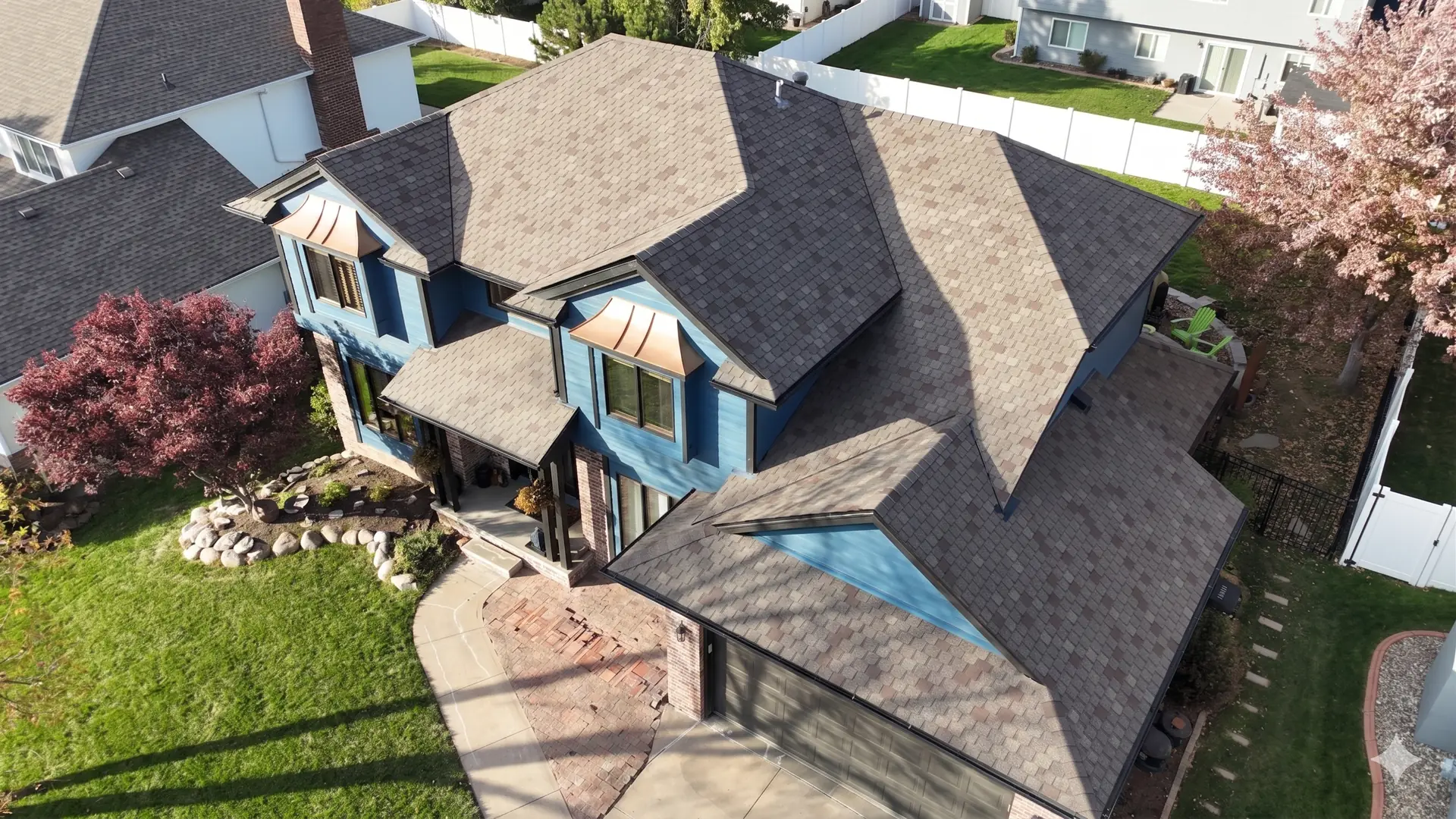
A free roof inspection in Kansas City covers shingles, flashing, pipe boots, and gutters. Here is what Capstone inspects and when to schedule one.
Most homeowners in the Kansas City area schedule a free roof inspection after a storm or when a water stain appears inside. That is a reasonable starting point. But a free roof inspection in Kansas City does more than confirm what you already suspect - it finds the problems you did not know were there, before they grow into something costly. Capstone offers free inspections as the first step in every project because accurate information leads to better decisions, whether that leads to a repair, a replacement, or simply peace of mind.
What a Roof Inspection Covers
A full roof inspection covers every component of the roof system, not just the shingles visible from the street. Capstone checks the surface, the transition points, the penetrations, the drainage system, and the attic when access is available. Each part of that system has a failure mode. Skipping any of them risks missing the actual source of a problem while only treating its visible symptom.
The inspection is performed by the same crew that would do the work if a repair is needed. That matters because the person on your roof is not just running a checklist - they are reading the system as a whole and noting how individual components interact with each other.
Shingles and Granule Loss
Granule loss is one of the first visible signs that an asphalt shingle is approaching the end of its service life. Granules protect the asphalt layer underneath from UV exposure and water absorption. Once they shed in significant numbers, the exposed asphalt oxidizes and becomes brittle faster than most homeowners expect.
We look for bare patches on the shingle surface, granule accumulation in the gutters, cupping or curling at the shingle edges, lifted corners, and missing tabs. Each of those conditions points to a different failure mode. Cupping and curling often indicate ventilation problems or age-related drying. Missing tabs and lifted corners can be wind damage. Bare patches may be hail impact. The inspection notes which condition applies and where, so the repair scope is accurate rather than estimated.
We also check the ridge cap shingles, which take more direct UV exposure than field shingles and tend to fail earlier. A cracked or missing ridge cap allows water to enter at the peak of the roof - one of the least likely places homeowners think to look when tracing a leak.
Flashing, Pipe Boots, and Penetrations
Flashing failures cause more residential roof leaks than worn shingles do. Step flashing along dormers and sidewall transitions, chimney saddle flashing, and the metal seams at roof-to-wall intersections are the most common water entry points on a Kansas City home. Flashing that has lifted, separated, or corroded lets water travel directly under the shingles and onto the decking, where it moves laterally before it ever drips through a ceiling.
Pipe boots - the rubber collars that seal around plumbing vent stacks - crack and shrink as the rubber ages. Kansas City summers push rooftop surface temperatures past 150 degrees F on a dark shingle, which accelerates rubber deterioration. A cracked pipe boot allows water to run straight down the vent pipe and into the attic, often producing a stain well away from the actual entry point. We check every penetration on the roof, including HVAC curbs, skylights, and any other through-roof fitting.
Storm Damage, Hail, and What the Eye Misses
The Kansas City metro sees hail damage multiple times each storm season. Hail impact on asphalt shingles is not always visible from the ground, or even obvious from a standard walking inspection. The impact breaks the bond between the asphalt layer and the granule coating, creating a soft spot that absorbs water without a visible puncture. Over time, those soft spots crack and separate, but the structural damage starts the day of the storm.
We photograph every area of impact concern and document both the surface condition and the pattern of damage across the roof. That documentation matters when you pursue an insurance claim, because carriers require evidence of storm-specific damage rather than general wear. The difference between a paid claim and a denied one often comes down to whether the damage was properly documented after the storm.
After high-wind events, we look for lifted shingle edges, popped fasteners, and sections where wind has separated shingles from the decking along the rake or eave. Storm damage and hail damage frequently appear on the same roof after a single event, and they require different repair approaches. Identifying both during the same inspection avoids a second trip and a second round of documentation.
Gutters, Decking, and Ventilation
Gutters are part of the roof drainage system. Gutters that are pulling away from the fascia, sagging in the middle, or clogged with debris let water back up against the roof edge. That is a reliable cause of wood rot along the eave and water intrusion at the fascia line, both of which are more expensive to repair than the gutter problem that caused them. We check gutter attachment, slope, and joint seals during the inspection.
Decking condition is checked from the attic when access is available. Soft spots in the plywood or OSB decking indicate moisture absorption that has been occurring over multiple storm cycles, not just the most recent one. A roof that looks surface-sound from above can have compromised decking underneath that will not hold fasteners properly through a full replacement.
Ventilation is checked for blockage and balance. Kansas City winters create freeze-thaw cycles that drive moisture into attic spaces. Poor ventilation lets warm interior air condense on the underside of cold decking, which produces water damage that looks identical to a roof leak but has nothing to do with the shingles. Identifying this during an inspection prevents a misdiagnosis that leads to an unnecessary roof repair.
What You Receive After the Inspection
After the inspection, Capstone provides a written report with photographs of every problem area. You receive a clear repair scope and a written estimate before any commitment is required. If we document storm or hail damage, that report and photo set becomes your starting point for an insurance claim. We do not make coverage decisions - that is your carrier's role - but we make sure you have the documentation you need before you decide how to proceed.
If you choose to file a claim, Eric personally attends the adjuster meeting and handles the supplement process when the initial scope does not reflect the full damage. That is part of Capstone's insurance claim assistance process, available to every client who brings us onto a storm damage project.
The inspection is free and carries no obligation. If the roof is in solid shape, we tell you that. If there is a problem, you get a written scope and a real number before you make any decision. Schedule your inspection Monday through Saturday, 8 a.m. to 8 p.m.
Frequently Asked Questions
What does a free roof inspection from Capstone include?
A free roof inspection covers the full exterior of the roof system: shingles, flashing, pipe boots, gutters, valleys, and the fascia and soffit at the eave line. When attic access is available, we check the decking and ventilation from inside as well. You receive a written report with photographs and a repair scope at no charge.
How long does a roof inspection take?
Most residential inspections take between 30 and 60 minutes, depending on roof size, complexity, and the number of planes. Steep slopes and multi-story homes take longer. We walk the full exterior and photograph every area of concern before providing a written report.
Can a roof inspection help with an insurance claim?
Yes. Capstone documents visible storm and hail damage with photographs and provides a written damage report and repair scope. That documentation is the starting point for an insurance claim. Coverage decisions are made by your carrier, but accurate documentation before you file puts you in a stronger position.
Do I need to be home during the inspection?
You do not need to be on the roof, but we prefer that someone is available to walk through the findings once we come down. That conversation lets us explain what we found in plain terms, answer questions, and make sure the written scope reflects what you heard from us.
How often should I schedule a roof inspection in Kansas City?
After any hail or high-wind event, regardless of how the roof looks from the ground. Otherwise, once every two to three years on a newer roof and annually on a roof that is 10 or more years old. Kansas City's most hail-active months typically run from April through August, so late summer or fall is a practical time to check the condition heading into winter.

Rebekah Saettone, Founder and CEO. Woman-owned roofing in Greater Kansas City since day one.